 Hanna VoronovaCEOUnited Kingdom
Wondering why would somebody need to create a healthcare mobile app? Medical mobile apps can make clinical operations more efficient and extremely improve the lives of both patients and hospital staff.
Depending on the type of healthcare mobile application, it can:
There is a new terminology that has arisen just recently - mHealth (mobile health) that is responsible for monitoring the state of patients using mobile technology, such as wearables connected with mobile apps.
The global mHealth market is already booming and is expected to grow by 38.5% yearly by 2025 resulting in US $289 bln worth, according to research. So if these figures excite you and there is a plan in your mind to create a medical mobile app, let's get through the main points in this process.
First, you need to think through the type of app and the ways to monetize your efforts in this sphere. Then you are welcomed to check the step-by-step guide towards your successful medical application!
Before choosing the most appropriate app type for your business needs, let's see what is trendy these days.
Of course, the well-known trends in mobile app development also relate to the healthcare sphere. Besides those, there are more specific ones for the mHealth market.
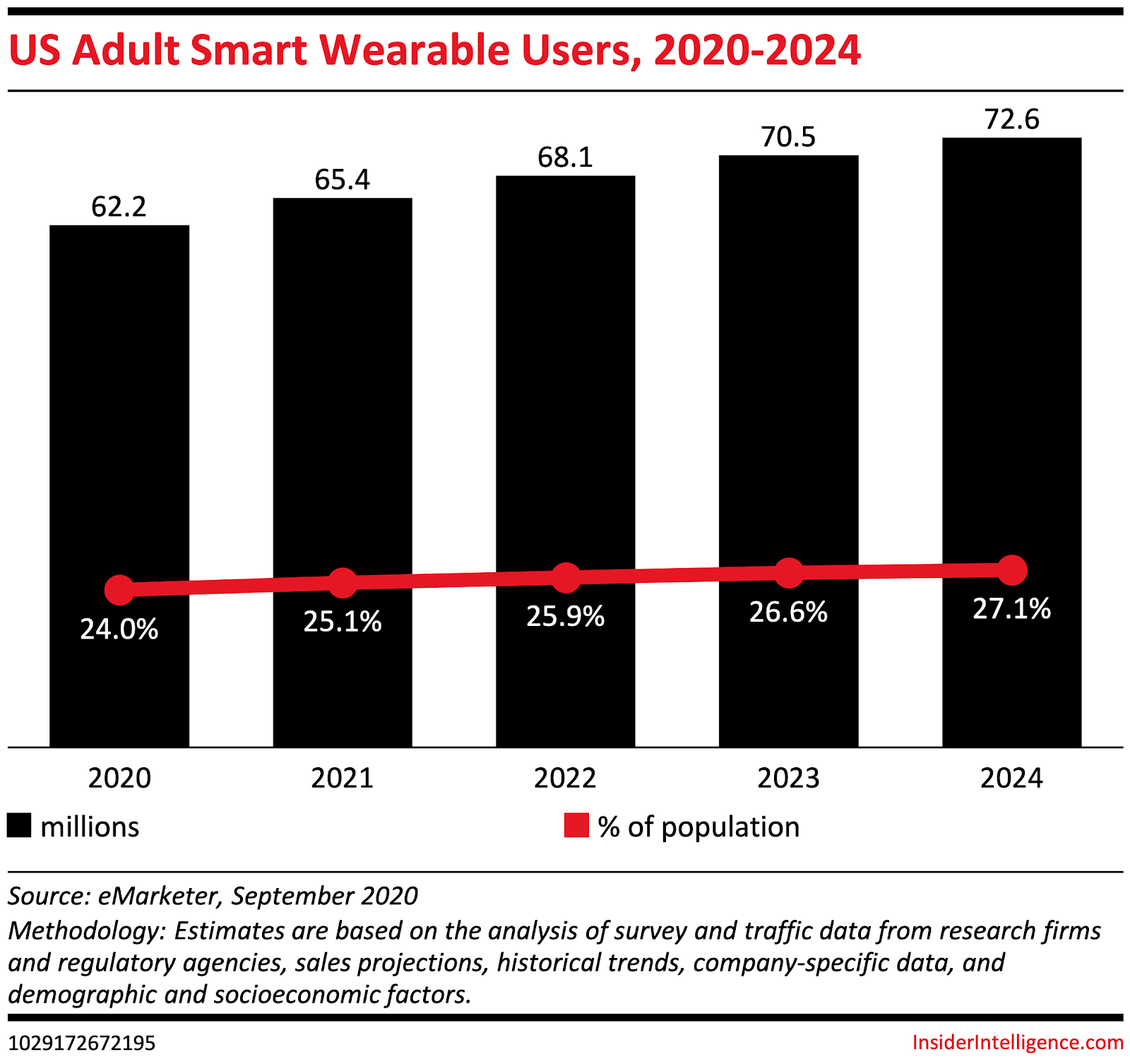
Various wearable fitness trackers are getting increasingly popular and this tendency is expected to grow more. According to the research of Insider Intelligence, around 80% of people are willing to use fitness wearables in order to track their health state including heart rate and blood pressure. It is more relevant for the senior generation. Though young people are more likely to choose fitness trackers to monitor their sports activities.
That is why patient-generated data gets more accessible for physicians and popular in the healthcare sphere. The apps connected to wearables help to gather the patients' health records in real-time. This regularly updated information allows doctors to make better decisions about further patient treatment, share data with other specialists and react fast in changing conditions.
The mHealth apps with geolocation help users to find the necessary medical facilities, pharmacies, and healthcare organizations.
But the list can be continued. Besides the actual institutions, such apps can showcase specific statistics for a certain location like local disease rates or the ecology state.
Furthermore, a user can receive the necessary guidelines on how to react to possible threats in local conditions. For example, if you come to some foreign country and there is a high risk of getting a bite from a wild animal or an insect. Such an app can give you full instruction on your actions based on your geographical location.
It applies to all kinds of information, like getting the names and prices of local drugs, receiving medical news and statistics about local accidents, etc.
Read also: A Complete Guide to Location-Based App Development
Scheduling an appointment via phone is a thing of the past. People don't want to know the exact working hours of any facility to register for a visit to a doctor. They wish to do it automatically at any time and place simply by making a few taps on the screen of their smartphone.
That is also applicable to receiving any kind of helpful information. Messengers step into our lives as a convenient way to communicate with the whole world. They can be of different purpose: either only for communication between the medical staff or connecting physicians and patients.
A healthcare chatbot with integrated artificial intelligence technology will be much appreciated by patients of any medical institution. The chatbot technology is a proven way to deliver better quality in a cost-efficient way as it involves processing general questions by a chatbot and handling individual cases by human operators.
Telemedicine services are usually conducted via online tools and currently are getting really popular as not all patients have an opportunity to physically visit a doctor. This is especially critical when the illness is connected with physical restraints or infection threats.
The demand for telehealth app development is growing especially after the fact when the world has witnessed the well-known pandemic. Performing medical assistance and consultation via video and chat is safer for both parties and reduces the waiting time.
Very often people with chronic diseases neglect taking pills on time. The most common reason for that is they simply forget to do it. Once patients realize their failure, they become self-pity which only adds to their bad health state.
Medication reminder apps are designed to solve the problem by providing specific information for the patient about the medication, its dose, side effects, reactions, and schedule.
When the time comes, users get push notifications. Physicians in their turn can monitor whether the patient has taken the prescribed pills.
That is not the whole list of innovations that can be implemented into the healthcare industry these days but it is the most popular one.
You may ask, how can healthcare mobile apps pay off? There are many available monetization strategies and you may be surprised by the opportunities hiding behind this kind of apps. Actually, business models are very similar to any other type of app. Though the choice obviously depends on its purpose and your business goals.
Here are the most suitable business models for a healthcare mobile app:
The monetization strategy you choose may depend on the type of app you want to build. Some apps offer different options for their users trying to meet the clients' needs best.
Now you already know what to consider before starting the actual healthcare app development process - what trends drive the market and which monetization strategies are at your disposal.
The next step is to actually choose the type of app that you want to create. No matter which one you select, if you wish to make quality your highest standard, it is extremely important to stick to native app development which involves creating an app specifically for each operating system afresh.
There are numerous types of medical apps that present different goals and target a different audience thus they have a different feature set. Here are a few of the major types:
Each app serves a certain goal and requires solving a specific problem for a target audience.
Guess why there are numerous apps of the same kind and most of them are not popular? That's because mostly their creators do not bother themselves to make research.
Each successful healthcare app resolves some issue that medical staff or patients have. Your app should be of real value that is able to beat competitors by offering a unique proposition for users.
The app design should be user-friendly, responsive, and empathetic. This involves the user's ability to navigate the app without complications on any popular operating system and a device's screen resolution. The empathy point means that you should foresee the needs of your target audience. For instance, the senior generation requires using larger fonts, etc.
The best way to start is to create an MVP of a medical app that requires having only the core functionality of the planned product. This way you can begin by investing the least funds into the app development that includes only essential features for your product.
Read also: How to Plan a Minimum Viable Product: a Step-By-Step Guide
Once the MVP is ready, you can launch it. This is the stage that defines whether your app idea meets the users’ expectations. It allows to validate the app idea, gathers users' feedback, and improve the app's functionality accordingly.
If you ask how much does it cost to create a healthcare app, the answer would be: it depends on many factors including the feature set, platforms, API integrations, developer's hourly rate.
Read also: How Much Does It Cost to Make an App in 2021?
Most importantly is to start the app development with the right mobile app development team. Check out how to find and hire the best app development team in our article.
Healthcare apps move the industry forward. They simplify and fasten many processes for physicians and patients like providing remote consultations, store patient's data in one place, monitor the patient's health state, reduce the usual waiting time within medical check-ups, and much more.
Innovative technologies like artificial intelligence can additionally help to predict diseases and perform diagnosis faster.
Surely, some solutions may be complex though you don't have to develop the whole system at once. Thus there is no need to invest too much money without knowing whether it will be useful for your target audience. Simply start with an MVP development and upgrade the product over time.
Have a healthcare app in mind? Let's create a medical app serving your business needs together!
Your idea - our execution. Let's create meaningful solutions together!
Contact ustags
Web to App Development: How Companies Convert Web Traffic Into Mobile App Users
February 6, 2026
What Is Backend in Mobile App Development and How to Create a Custom One
May 19, 2022
Top 7 Mobile App Development Trends to Follow in 2023
February 4, 2021