 Hanna VoronovaCEOUnited Kingdom
In an increasingly digital world, payment apps have revolutionized the way we manage and make transactions. They offer an unprecedented level of convenience, making it easy to pay for goods and services, transfer money to friends and family, and manage our finances with just a few taps on our smartphones. Yet, behind the seamless experience for users is a complex infrastructure that powers these payment apps. If you are a product founder looking to venture into the world of payment app development, navigating through this intricate landscape can be daunting. This comprehensive guide is tailored to equip you with insights from conceptualizing the idea of a payment app to successfully transforming it into a fully functional product.
A Peer-to-Peer (P2P) payment app is a platform that allows users to send money from their bank account or credit card to another individual's account via the internet or mobile services. This modern financial convenience eliminates the need for checks or cash transactions, making it easier and faster to manage personal debts, split bills, or share expenses.
P2P payment apps, like Venmo, PayPal, and Cash App, have become increasingly popular for their ease of use and the speed at which they can process transactions. These applications use secure and advanced technology to ensure the safety and privacy of users' financial information, providing not just a seamless experience but also peace of mind. With a P2P payment app, the complexity of financial transactions is simplified, fostering a more connected and financially agile community.

Understanding the operation of payment apps is essential for realizing their potential in streamlining financial transactions. At their core, payment apps serve as an intermediary, facilitating the transfer of funds between two parties. Here’s how they generally work:
Each payment app may have additional features and steps, like encryption and multi-factor authentication, enhancing the security and functionality of transactions, providing users not only convenience but also robust security in their financial dealings.
Read also: How to Build a Custom CRM Solution for Your Business: A Complete Guide
In an increasingly digital world, payment apps have carved out a unique and indispensable niche within the banking sector. Here are some compelling reasons why payment apps are now fundamental components in the financial industry:
By enhancing user experience with unmatched convenience, speed, and security, payment apps have indeed earned a unique and pivotal role within the banking ecosystem.
Peer-to-peer (P2P) apps have revolutionized the way we transact, making it seamless to send and receive payments digitally. Here, we explore the different types of P2P apps, each serving varied user needs and preferences:
By understanding the diverse types of P2P apps available, users can select a platform that best aligns with their transaction needs, ensuring convenience, speed, and security in their financial exchanges.

The architecture of a mobile payment system is the backbone ensuring the efficiency, security, and smooth functioning of the payment process. Here's a glance at the main components involved in the architecture:
In essence, the architecture of a mobile payment system is a multi-layered structure designed to ensure seamless, efficient, and secure transactions, providing both the user and the merchant with a hassle-free and swift payment experience.
Navigating the world of payment app development involves avoiding substantial pitfalls, paramount among which is ensuring robust security. Protecting sensitive financial data is crucial to avoid significant losses and reputation damage. Implementing advanced security features and compliance with global and local financial regulations is non-negotiable to maintain legal standing and customer trust.
Further, a user-friendly interface is essential to prevent app abandonment, while avoiding technical glitches and ensuring quick transaction speeds are vital for seamless user experience. Ensuring scalability to manage growing user numbers is also crucial for the app’s sustained performance. Thorough planning, continuous testing, and adherence to global standards help lay a robust foundation for a successful payment app.
Read also: Proof of Concept: 5 Steps for Successful App Development
A top-notch payment app combines stellar security with seamless usability. Ensure robust protection with features like biometric authentication, encryption, and multi-factor authentication to shield user details and transactions. Prioritize a clear and intuitive interface that allows users to easily link multiple accounts and cards, conduct instant transfers, and quickly generate and share invoices.
Enhance your app’s appeal by including real-time alerts, a detailed transaction history dashboard, support for cross-border transactions, and multi-language support. These additions not only assure users of their transaction's safety but also make your app a comprehensive, user-friendly financial tool accessible to a global audience.
Building a superior payment app demands a step-by-step approach to ensure its efficiency, security, and user-friendliness. Below are five crucial steps to follow:
By following these steps meticulously, you'll lay a solid foundation for a successful and reliable payment app, guaranteeing not only a fantastic user experience but also robust security and efficiency in operations.
In the intricate world of payment app development, the right technology stack is crucial for ensuring secure, efficient, and seamless operations. For mobile development, technologies like Swift or Objective-C for iOS and Kotlin or Java for Android ensure an optimal user experience.
Backend operations should prioritize robust languages like Node.js, PHP, or Java for seamless server-side functionalities. Essential database management systems such as PostgreSQL or MongoDB offer secure and organized data handling. Integrate esteemed payment gateways like PayPal, Stripe, or Square, ensuring secure and effective transaction processing. Leveraging blockchain technology further enhances security, especially for peer-to-peer transactions.
Incorporate comprehensive security measures including SSL certificates, OAuth 2.0 protocols, multi-factor authentication, and end-to-end encryption. For streamlined testing and deployment, employ continuous integration/continuous deployment pipelines and automated testing tools. This strategic technology stack lays the foundation for a secure, user-friendly, and efficient payment app, meeting the high standards requisite in the financial sector.

When considering P2P payment apps, several leading names set the bar by offering user-friendly, secure, and efficient services that have revolutionized the way individuals send and receive money. Here are a few standouts:
These examples highlight the diversity and innovation present in the P2P payment app market, offering various features and benefits tailored to different users' needs and preferences.
Read also: 7 Causes of Poor Mobile App Performance and the Best Ways to Fix It
Developing a payment app's cost fluctuates significantly, with rates starting from $20,000 for a basic app with minimal features, to over $100,000 for a comprehensive, feature-rich platform. This broad spectrum is influenced by the app’s complexity, the range of integrated features, and the geographical location of the development team, with developer hourly rates ranging from $25 to $150. Besides the development costs, anticipate additional expenditures for maintenance, updates, and marketing. It’s prudent to allocate an extra 15-20% of your initial development budget for these inevitable post-launch expenses. A common miscalculation to avoid is the continuous addition of features, known as feature creep, which can substantially amplify costs and prolong the development timeframe. Neglecting the importance of ongoing maintenance and omitting a sufficient budget for comprehensive marketing and user acquisition strategies are other pitfalls to steer clear from for ensuring your app’s post-launch growth and enduring success.
Choosing the right team for P2P app development is paramount for the fruition of your project. TopDevs, a seasoned player in the app development arena, exemplifies the kind of dedicated team you should seek. Start by analyzing potential teams' portfolios to understand their expertise in P2P app development, similar to the vast experience TopDevs holds. Hold interviews with the candidates to delve into their development and communication styles. Opt for teams that assure transparency, comprehensive understanding of your goals, and present a clear and concise development pathway, just like TopDevs. It’s essential the team provides continuous support for updates and bug fixes, ensuring your app's longevity and unceasing growth. This careful selection will lead to a smooth development phase and enduring success of your P2P payment app, as evidenced by TopDevs' extensive and satisfied clientele.

Based on the successful case study of the 24/7 billing app, TopDevs’ dedicated team manifested their skill in integrating simplicity and efficiency, ensuring the app's seamless operation for all users. Our approach underscores the commitment to meeting diverse user needs by supporting various payment types like Visa, ApplePay, Mastercard, and more. The user-friendly and stable interface, capable of handling significant data volume, is testament to their attention to detail and commitment to user experience.
The high demand for the 24/7 billing app in the Australian market, along with its continuous development, highlight TopDevs' innovative approach in delivering effective fintech solutions. Choosing TopDevs for payment app development means opting for a partner dedicated to bringing your vision to life with a wealth of proven experience. The team’s commitment to ensuring your app embodies reliability, innovation, and a stellar user experience positions it for enduring success in the competitive fintech arena.
This comprehensive guide for product founders navigates the intricate world of Payment App Development, ensuring clarity from idea inception to actual product launch. The article begins with a fundamental understanding of P2P Payment Apps, elucidating their operation and significant standing in today’s banking world. With insights into various types of P2P apps and the architectural underpinning of mobile payment systems, the guide further explores common development pitfalls, spotlighting essential features for robust payment app functionality. Readers gain a structured pathway with a defined 5-step process for building a payment app, complemented by a discussion on the optimal technology stack for development. Real-world examples, practical cost estimates, and developer rates provide tangible context. The article underscores the pivotal role of choosing the right development team, illustrated by TopDevs' proven expertise in the 24/7 billing app case study, affirming their commitment to user-centric, innovative, and reliable fintech solutions. Embark on your payment app development journey with this all-encompassing guide, ensuring a well-informed and strategically aligned approach for sustainable success in the fintech realm.
Your idea - our execution. Let's create meaningful solutions together!
Contact ustags
7 Causes of Poor Mobile App Performance and the Best Ways to Fix It
April 26, 2023
How to Create a Food Delivery App Like Deliveroo or UberEats
February 22, 2023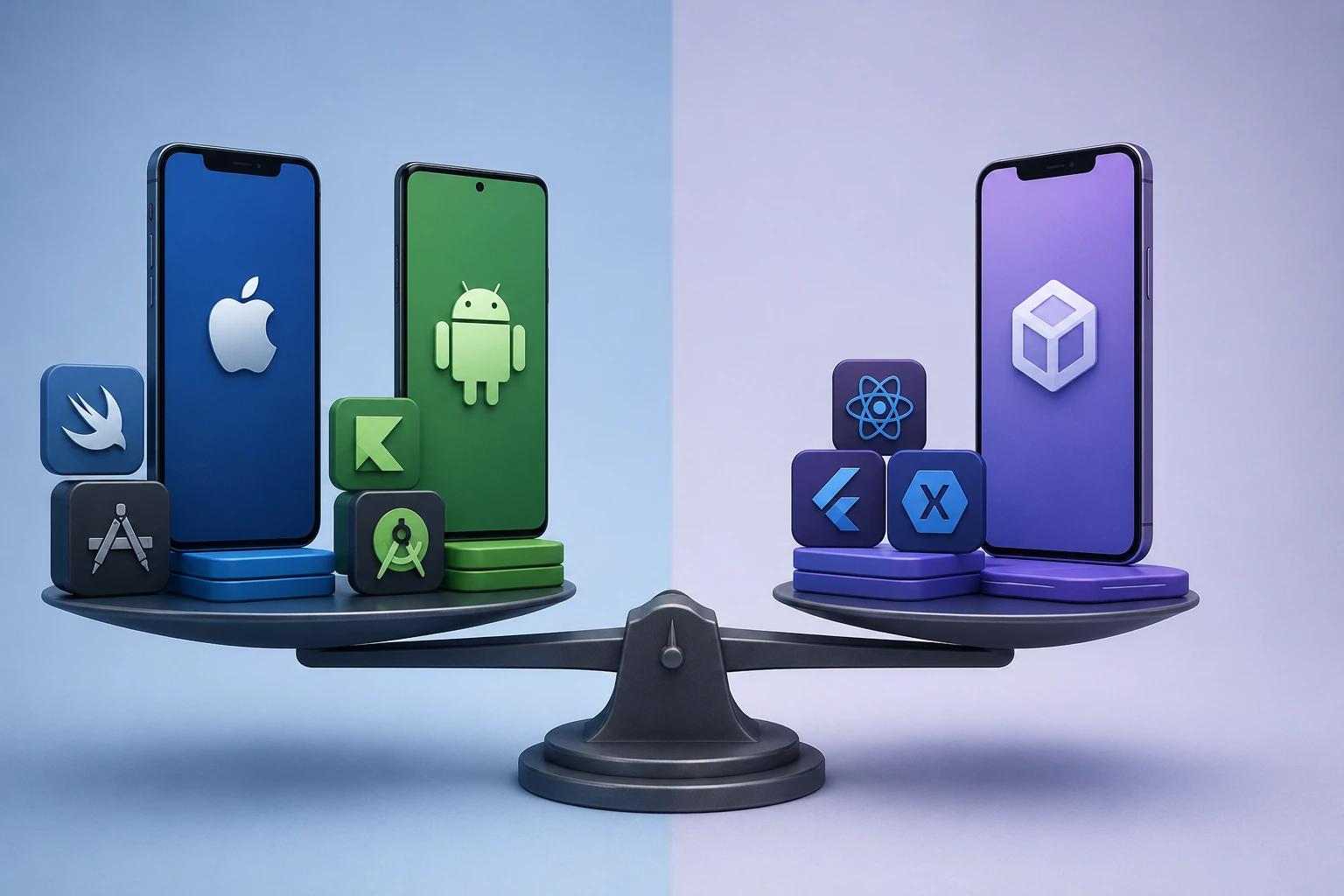
Native vs Cross-Platform Mobile App Development: What Should You Choose?
May 15, 2026