
5 Major Logistics Pain Points & How We Can Solve Them

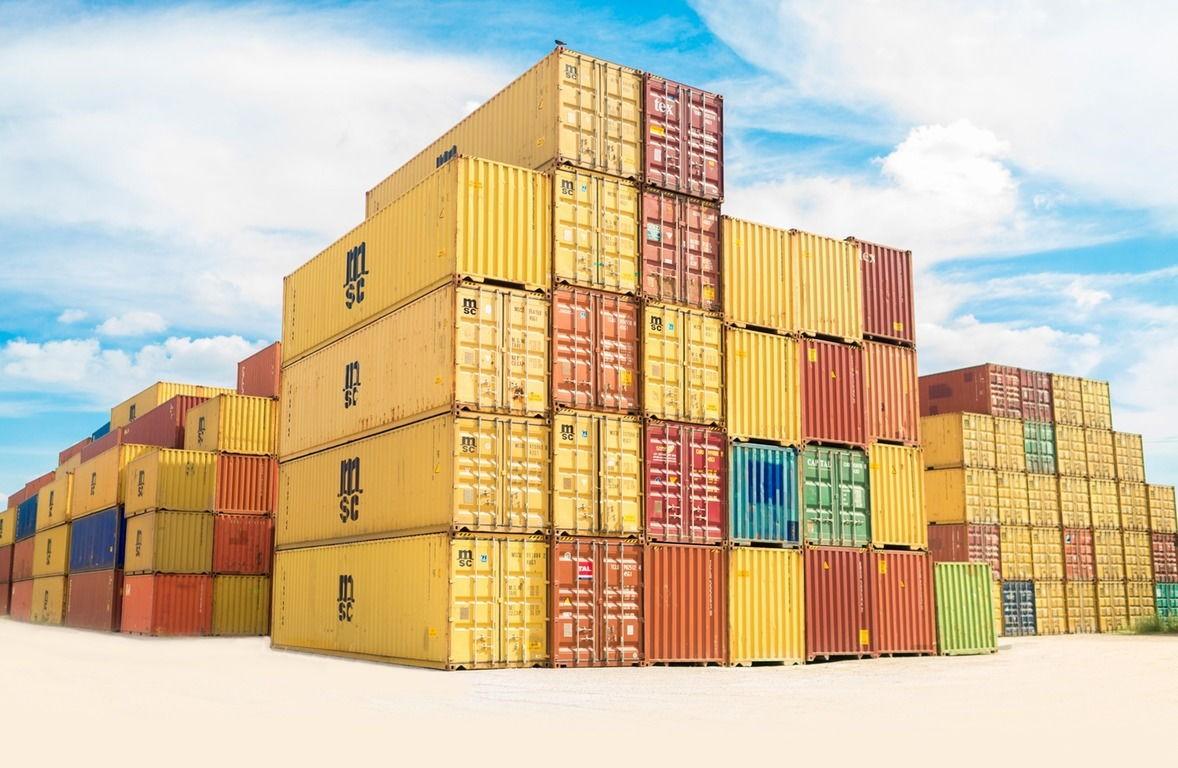
Nowadays logistics enterprises face fierce competition from newcomers - either startups or the industry’s own suppliers. These are unprecedented times when digitization takes hold and customer needs are changing dramatically. So companies can't just sit back and watch, especially taking into account the estimated US$4.6 trillion of revenues at stake.
To stay on top organizations should implement the digital best practices and re-imagine their logistics infrastructure.
The Logistics Industry Statistics
Just a few facts to help you envision the prospects:
- Only 20% of companies are taking advanced steps in digital logistics development.
- Around 63% of organizations have never used technology innovations for monitoring the performance of their supply chain.
- 79% of companies with high-performing supply chains greater revenue growth compared to competitors.
So you see that logistics companies still lag far behind from other industries in digital transformation though it can greatly improve many aspects of the company functioning.
Read also: How Much Does It Cost to Make an App in 2021?
Top 5 Logistics Trends
Surely, companies often struggle from major pain points that influence the overall performance and may take back their growth. To handle them adequately is a real challenge as it requires consideration of several angles of the deal at once. Each party of the supply chain has its own challenges to meet.
Customers
- Want an increasingly fast delivery
- Search for the lowest shipping costs
- Require flexibility in destinations
- Demand easy returns
- Wish to see the tracking data in real-time
- Expect reliable and safe packaging
Retailers
- Rebalance the shipping portfolio to provide more options for customers
- Get full visibility of the shipping process
- Control the quality of each delivery
Carriers
- Find ways to cut costs for delivery
- Increase delivery accuracy
- Implement predictability based on data
- Enhance safety, with lowered insurance payments
This way to improve the overall functioning of the logistics systems companies operating in the industry should follow the latest trends that not only will help them to keep up with the race but establish a leading position on the market.
Logistics Trend #1. Meet Customer Expectations
Providing an effective customer response is a challenge of any industry at all times. People are always searching for better services and fresh new approaches. One trend during recent years is the increasing demand for live updates on shipments during transit. Customers want real-time tracking options and expect to receive updates every 1-2 hours in the most convenient way.
Stats & Predictions
- 30% of supply chain leaders see the importance of speedy, accurate, and unique order fulfillment as a top business priority.
- By 2024, 75% of all consumer-oriented businesses will be able to scale their supply chains resulting in 2-3% of market share increase.
Challenges
Despite the rise of technologies, shipment visibility stays a real problem in supply chain management. It remains almost impossible to track the cargo moving overseas. Most of the information about deliveries via ocean or air can not be allocated at a precise time. Just imagine, around 600 containers were lost in the sea excluding catastrophes from 2008 to 2016 years. These figures are terrifying as the volume of transportations gets bigger over time.
So the need for real-time monitoring of each shipment becomes equally important both for customers and logistics companies.
Customers want full transparency of the delivery process at all times. Currently, the package location is as interconnected as a social network. In fact, as consumers get more demanding, supply chain providers should look for ways to tailor personalized offerings to satisfy their needs.
Some delivery companies provide online tracking of the whole shipment path, the others keep customers updated at certain points of the shipment way.
Nowadays, not only individuals but also industrial customers expect to receive cargoes faster, more flexibly, and with more transparency at a lower cost.
Our Solutions
From our extensive experience in logistics apps development, we are well aware of the pain points and necessary solutions for the logistics industry.
Among the latest works that we've delivered was an Autodeal case. We've implemented online tracking of carriers. This way, logisticians can monitor the location of the driver in real-time. Concurrently, customers can track the geolocation of their cargo right from the app at any given moment.
Another really important solution for not only the logistics industry but for any other customer-centric business is a special SDK that helps to understand the customer needs. GoG can be easily integrated into any existing application to track the changing consumer requirements and provide a personalized customer experience. Actually, the solution tracks and gathers major data about the app user location and performed activities.
Based on collected information, businesses receive an accurate buyer persona that helps to predict future customer behavior and offer the most fitting products or services.
Logistics Trend #2. Evolving Digital Requirements
Even these days many logistics companies struggle with outdated operations management, fragmented approach to IT systems, and overall processes execution. Leading toward digitalization may not be so useful if the company legacy is not adapted to the new market conditions.
Stats & Predictions
- By 2025, the market share of transportation management systems across the globe is expected to reach $4.8 billion.
- A transportation management system can reduce freight invoice payments by 90-95%.
- Only 35% of logistics companies employ transportation management systems.
Challenges
Over time the supply chain management becomes more complex. Products and services are getting more complex as well. People require more customized goods. As it's getting much harder to navigate the market.
Also, supply chain operators require integration of the financial systems, supplier settlement platforms, etc. These partnering organizations can help to manage tax operations, invoicing, and other critical functions.
Making improvements in business processes, the company leaders shouldn't forget about accomodating multiple business models for international market expansion.
Nowadays every business strives to get on the wave of innovations, though its adoption may sound overwhelming. So it is crucially important to make improvements with the existing legacy first to implement innovations further.
Our Solutions
At TopDevs, within an initial call with a client, we gather the necessary information on the current business state that helps us to offer the most suitable solutions for each particular case. As we believe that any innovation that clients want to implement into their business should wholly correspond to their business objectives and be flexibly integrated into the existing IT system.
When we were approached by our client to create a whole new system for car transportation within the AutoDeal case, we've realized the complexity of various platforms integration into a comprehensive solution. It required the distribution of features for several roles: carriers, brokers, and car buyers.
Each party receives a special feature set aiming at prudent order management, payment processing, contracts signing, accurate assessment of the vehicle damages state before transportation, and real-time delivery tracking.
Read also: Why Hire Ukrainian Web Development Companies for Outsourcing Your Project?
Logistics Trend #3. Logistics Automation and IoT
Many logistics processes require manual execution. For example, monitoring the state of the goods or vehicles within transportation. It takes additional time resulting in bigger costs for the actual delivery process.
Stats & Predictions
- 39% of supply chain companies see a priority to implement IoT technology into monitoring equipment health.
- 75% of large manufacturers aim at updating their processes with IoT implementations to mitigate risks
Challenges
Different types of goods require specific terms for their transportation. Some goods may be fragile which means that they need very solid packaging and safe shipping. The others need a certain level of temperature within the whole shipment path. That's extremely relevant to food delivery.
Manual assessment of certain things is not accurate, takes additional time and effort. So it is much more convenient if drivers and logisticians can immediately get a notification within an app or any other convenient way when the trailer temperature rises above a certain threshold.
This way people can monitor the transportation conditions and change them upon the necessity. For this, you need a certain device that can measure the temperature or any other state and check whether it matches the required indicators. Then send the notification directly to the application.
There is no need for logisticians to call a driver anymore with instructions to check and change the temperature conditions within the necessary framework.
Once truck drivers receive an alert, they can immediately correct the situation to avoid the goods damage.
Our Solutions
To implement a monitoring solution all that a logistics company needs is a sensor on the truck that scans the required state and sends the information through GPS to the application.
We have already implemented solutions that help to monitor the location of the vehicle and gather data from a certain device in real-time. Then the application checks whether the collected information meets the necessary requirements. If it doesn't, the app sends corresponding alerts to its users.
Read also: How to Describe a Project to a Web Development Company?
Logistics Trend #4. Moving to the Cloud
Currently, there is a huge shift from local data storage to cloud systems utilization across most industries worldwide. Logistics also keeps up with this trend. As it makes all services mobile and easy-to-access.
Stats & Predictions
- People get confused thinking that cloud storage is 10% riskier though actually, on-premise solutions get a 24% higher risk of compromise for data.
- 39% of businesses see cloud computing technology as a top priority in the supply chain industry.
Challenges
Lots of logistics companies still don’t have cloud capabilities. So to get the necessary information from their systems brokers should make phone calls instead of using a unified platform at the right moment.
The cloud technology makes all the data widely accessible for each particular user role. It adds flexibility, time- and cost-efficiency to operations inside the logistics industry.
Our Solutions
One of the deserving examples of logistics apps with the already implemented cloud opportunities is the Solocator app. The app’s main goal is to gather the necessary data about a particular location where the photo was taken and put it on the image itself.
We've integrated a possibility to export the images and relevant data in separate files to the cloud systems. This way anyone from field workers to real estate agents can get the required information upon authorized access.
Logistics Trend #5. Data Analytics
Currently, there is a huge shift from local data storage to cloud systems utilization across most industries worldwide. Logistics also keeps up with this trend. As it makes all services mobile and easy-to-access.
Stats & Predictions
- 81% of logistics leaders agree that data analytics can greatly reduce the landed costs
- By 2023, 65% of warehousing activities are projected to use robots and data analytics to optimize goods storage and cut order processing in half.
Challenges
Uncertainty is a real challenge for supply chain management that can lead to a disastrous loss in time and money. Customers demand transparency in operations execution so the more accurate the estimated delivery time, the higher trust the logistics company gains.
Top leaders of the supply chain management recognize the urge to invest in data analytics and machine learning technologies. Data analytics can predict events and present recommendations for future behavior scenarios. It takes lots of factors into account.
For example, based on previous data, if the carrier usually arrives late, it can prolong the expected delivery date. Or if there are certain weather conditions like tsunamis, hurricanes, or even a virus outbreak, the system can recommend changing the supplier from another location.
Big data is already our reality. Analyzing big data can give key insights and help to innovate resulting in enhanced competitive advantages. Supply chain managers can make valuable business decisions based on real-time data across the whole supply chain.
Our Solutions
To evaluate and predict future scenarios we've implemented the data analytics system into our GoG app which is an SDK solution that can be integrated into any existing application. It gathers information about users’ locations and their activities. It can be implemented with Google API and Apple maps. Then it analyses the collected data and forms a buyer persona profile. Based on this information the system can predict future activities to make personalized offerings.
Conclusions
The constant market changes make serious pressure on logistics companies that haven't yet developed a competitive supply infrastructure.
In the near future, worldwide logistics businesses will focus on increasing the visibility of the cargo transportation process. This will lead to transparency and security in the logistics industry.
Read also: The Best Practices to Mitigate Web and Mobile App Security Threats
The future of logistics lies in technologies and innovation. Supply chain management will set up the distribution channels bridging the gap between businesses and customers. It will enable them to either create their own digital systems or utilize third-party platforms.
Ready to break into the future? Let's create a logistics app to put your business at the forefront of the supply chain sector!
Your idea - our execution. Let's create meaningful solutions together!
Contact ustags