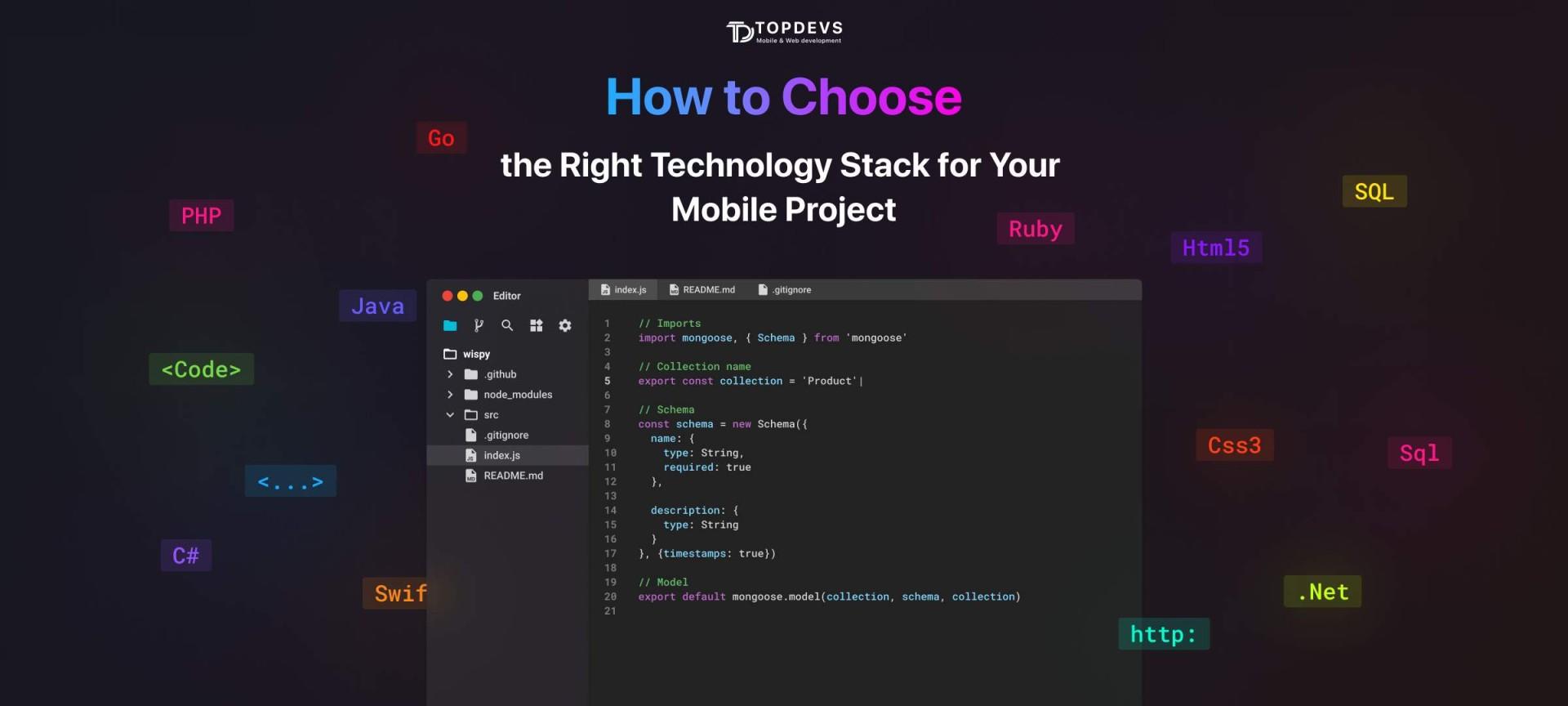
How to Choose the Right Technology Stack for Your Mobile Project

Remember that day when you didn't use any mobile apps? You probably don’t. The life of a modern person is surrounded by hundreds of different applications they use daily. We have dozens of them installed on our smartphones, tablets, laptops, and other devices.
Over the past few years, it has become essential for any business to develop its application for mobile platforms. An excellent point to start is to decide on the central idea of your app, but having one, you shouldn't rush to hire a third-party company and rush through the development process. Foremost, you should decide on the technology stack for your mobile application. This is an essential step to building a profitable app for your business.
Read also: How To Calculate App Development Costs and ROI for Your Mobile Project?
What is a Tech Stack In Mobile App Development?
In the simplest sense, the mobile app technology stack means a set of different tools that will help you build, run and maintain the final product. It typically consists of Frontend (client-side) technologies, Backend (server-side) technologies, and some design tools for UI. The front-end and back-end sides include programming languages, frameworks, and software development kits (SDKs).
Choosing the right technology stack is the key to building a successful, sustainable, and profitable app.
What Technologies Are Used For Mobile Application Development?

The set of technologies for each application is unique. It depends on the platform, the application's aim, complexity, and the main features. To make it easier to navigate when selecting the best technologies for mobile app development, we have prepared a list of the essential tools for developing iOS, Android, and cross-platform applications.
1. Programming languages. For native Android app development, you need Java and Kotlin. Native iOS tech stack includes Swift and Objective-C.
2. Frameworks. The most popular frameworks used to develop cross-platform applications are React Native, Flutter, and Xamarin.
3. Backend. The backend is the core of your application. The server part, which responds to user requests, accesses the database, creates data, reads it, updates it, and deletes it. The backend tech stack for mobile apps must include frameworks like Node.js, Ruby on Rails, and Django.
4. Databases. SQLite, Firebase, PostgreSQL, MySQL, and MongoDB are the most popular tools for managing your application's database.
5. UI frameworks. You can only imagine a high-quality and profitable application with a well-designed and intuitive interface. For creating an interface of iOS applications, SwiftUI and UIKit are usually used. And for Android apps, it's Android UI and Jetpack Compose.
Read also: AI App Development: Opportunities, Challenges, Use Cases, Features & App Development Costs
Factors to Consider When Choosing a Tech Stack
To help you decide on the technology stack for your project, we have highlighted five key points you should pay attention to when developing an application.
1. The app's aim and target audience. Understanding this is crucial for technology stack selection. For example, a gaming app requires strong graphics capabilities, while a banking app needs security features. Choosing the main feature and platform for your application will help you to select a mobile technology stack that aligns with your goals.
2. Overall complexity. Get the complexity of your application right. The technology stack will change significantly depending on the number of functions you want to implement. For example, developing a scheduling app requires fewer resources and technologies than building a dating app.
3. Budget. Design your budget first. Remember that the more complex your project is, the more technology you will need to implement it. Evaluate the cost of development, maintenance, and potential future upgrades, to ensure it fits within your budget constraints.
4. Time-to-Market. If you want to get your application to market as soon as possible, we advise you to focus on simple frameworks and technologies. Some tech stacks and frameworks offer rapid development cycles and quicker deployment.
5. Security. When developing mobile apps that handle personal data, prioritizing security and data privacy is essential. By ensuring the reliability and protection of your application, you can mitigate the risk of data theft and maintain the trust and reputation of your business. It also requires the use of an extended mobile tech stack.
Tech Stacks Used in Companies for Their Mobile Apps
Many popular apps with millions of users worldwide use similar frameworks, tools, technologies, and more. Here are some examples of mobile app stacks used by global companies:
- Instagram. The main framework that Instagram uses in its mobile application is React Native. This is a popular JavaScript framework that allows developers to build cross-platform apps.
- Spotify. Spotify follows the native development approach for its mobile app. The iOS version of the app is built using Swift, while the Android application is created using Java.
- Facebook utilizes Swift for iOS app development and Java for Android app development. For certain parts of their app, providing cross-platform capabilities, they use React Native.
Read also: When Should You Update Your App? The Complete Guide on Apps Modernization
TopDevs Can Help You Pick the Right Tech Stack for Your Project

To develop a good application for your business, you need the help of a team with a comprehensive technology stack and a deep understanding of all development processes. At TopDevs, we develop applications for different companies around the world.
The tech stack of mobile development of our team includes:
- Frontend Development (Javascript, Vue.js, React.js)
- Backend Development (PHP, Laravel, Node.js, MySQL, MongoDB)
- Native iOS App Development (Swift, Objective-C)
- Native Android App Development (Java, Kotlin)
We help our clients at all stages of application development, starting from discussing an idea. The TopDevs team will be happy to help you choose the best technology for mobile app development that aligns with your app's goals.
Read also: 7 Causes of Poor Mobile App Performance and the Best Ways to Fix It
Main Takeaways
The success of your project starts with choosing the right mobile app tech stack. This determines how reliable, fast, and user-friendly your application will be. Selecting the right frameworks, programming languages, and tools will help you implement all the main features of your application and meet all your target audience needs. But with this wide variety of tools, it takes a lot of work to navigate. To select the most suitable technology stack for your application, we recommend hiring a third-party company specializing in full-cycle application development. This ensures that you get a high-quality and profitable app for your business.
Your idea - our execution. Let's create meaningful solutions together!
Contact ustags