
MVP Development for Startups: How to Build, Test, and Launch an MVP Fast

For startups, speed is often the difference between success and failure. Markets change quickly, competitors move fast, and customer expectations evolve constantly. In this environment, building a fully featured product from the start is risky, expensive, and often unnecessary. This is why MVP development has become a core strategy for startup founders.
An MVP allows startups to test ideas, validate assumptions, and gather real user feedback with minimal investment. Instead of spending months or years building a complete product, founders focus on delivering the smallest viable version that solves a real problem. When done correctly, MVP software development accelerates learning, reduces risk, and lays the foundation for scalable growth.
This guide explains how MVP development works in practice, how startups can build and launch an MVP fast, and how working with the right MVP development company helps founders move from idea to market efficiently.
What Is MVP Development and Why It Matters for Startups
MVP development refers to the process of building a Minimum Viable Product - a version of a product that includes only the essential features needed to deliver value and collect feedback from early users. The goal is not perfection, but validation.
For startup founders, MVPs serve as learning tools. They help answer critical questions: Is there real demand? Do users understand the value? Are they willing to pay? Without these answers, scaling a product becomes guesswork.
Unlike traditional product development, MVP software focuses on speed, clarity, and experimentation. Every feature is evaluated based on its ability to test assumptions and support future growth.
MVP Development for Startups vs Traditional Product Development
Traditional product development often starts with extensive planning, feature lists, and long development cycles. While this approach may work for established businesses, it rarely fits startup realities.
MVP development for startups emphasizes iteration over perfection. Instead of building everything upfront, startups release early, learn fast, and adapt continuously. This approach reduces wasted effort and aligns development with real user needs.
A professional startup MVP development partner understands that change is inevitable. Requirements evolve, priorities shift, and insights emerge only after users interact with the product.
The Role of MVP Software Development in Startup Success
Many successful startups began with simple MVPs that solved a single problem well. Over time, these products evolved based on feedback and usage data.
MVP software development services help startups avoid overengineering and focus on core value. By limiting scope, teams can deliver faster, test hypotheses earlier, and make informed decisions about scaling.
For founders, this approach provides clarity. Instead of guessing what users want, they observe real behavior and adjust accordingly.
MVP from Idea to Launch: The Full Process
Building an MVP is not just about coding. It is a structured process that moves from idea validation to launch and beyond.
Idea Definition and Problem Validation
The first step in MVP product development is clearly defining the problem. What pain point does the product address? Who is the target user? Why existing solutions are insufficient?
Before writing code, startups should validate assumptions through research, interviews, and market analysis. This early validation ensures that development efforts focus on real needs.
A strong MVP development agency helps founders refine ideas and avoid building solutions for nonexistent problems.
Feature Prioritization and Scope Definition
Once the core problem is defined, the next step is deciding what to build - and what to leave out. MVPs are intentionally minimal. Every feature should support validation goals.
This stage often involves difficult trade-offs. A reliable MVP development company helps founders prioritize features based on impact rather than personal preference.
Clear scope definition enables fast MVP development and prevents delays caused by unnecessary complexity.
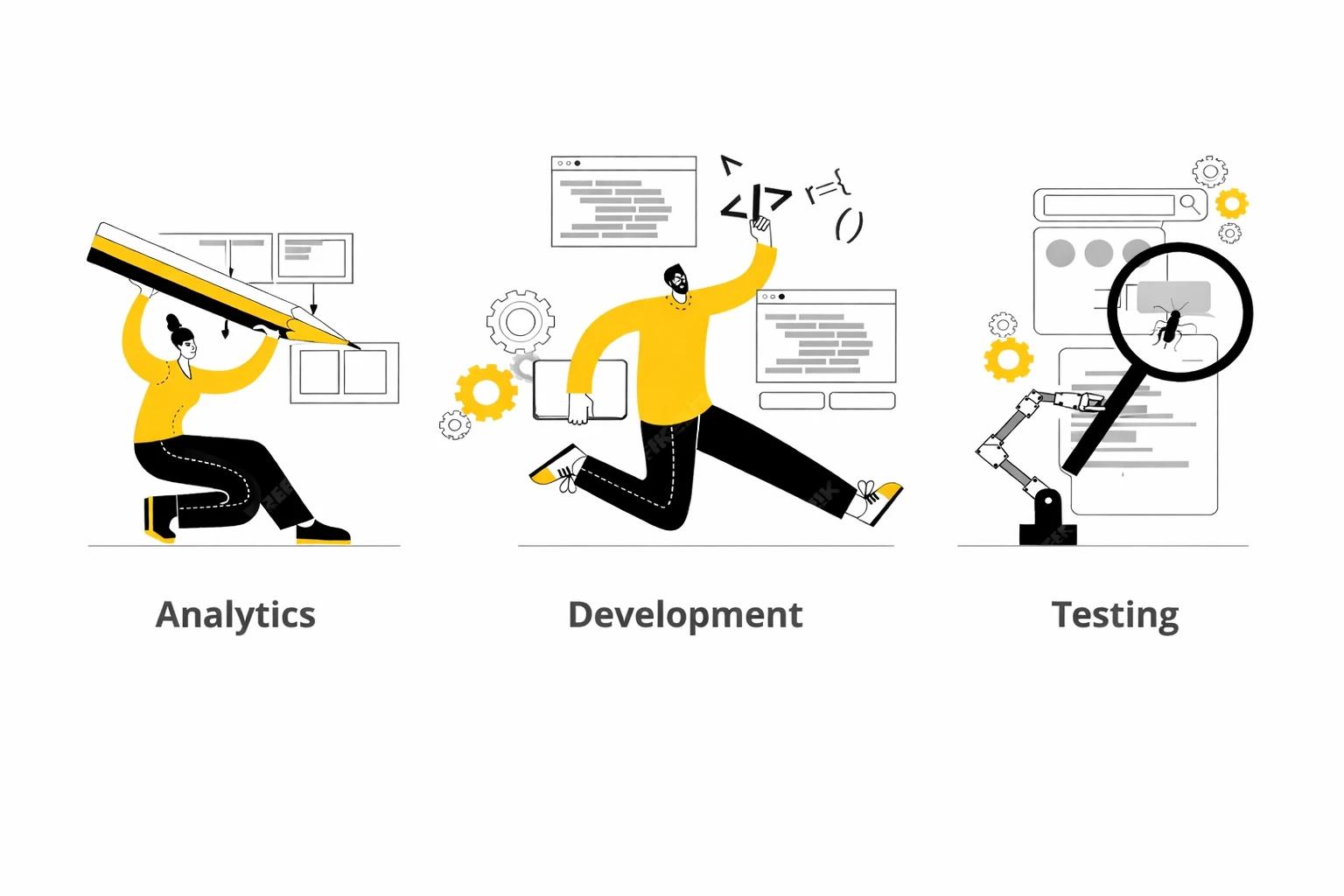
MVP Design, Development, and Testing
Design plays a crucial role in MVP success. Even minimal products must be intuitive and usable. MVP design focuses on essential user flows rather than polished visuals.
During development, engineers implement features incrementally, allowing early testing and feedback. MVP design development testing happens continuously rather than as separate phases.
This iterative approach improves quality while maintaining speed.
Rapid MVP Development and Time-to-Market
Speed is a defining characteristic of effective MVPs. Startups that can build MVP quickly gain a competitive advantage by entering the market sooner and learning faster.
Rapid MVP development does not mean cutting corners. It means focusing on what matters most and eliminating unnecessary work. Experienced teams use proven frameworks, reusable components, and streamlined workflows to accelerate delivery.
With the right approach, MVP development in weeks is often achievable, especially for early-stage products.
End-to-End MVP Development vs Fragmented Delivery
Some startups attempt to manage MVP development by splitting responsibilities across freelancers or multiple vendors. While this may seem cost-effective initially, it often leads to coordination issues and inconsistent quality.
End-to-end MVP development provides continuity. One team handles planning, design, development, testing, and launch. This reduces communication overhead and preserves product knowledge.
A full-cycle MVP development approach ensures that decisions made early align with long-term goals, even at the MVP stage.
Choosing the Right MVP Development Company
Selecting the right partner is critical for MVP success. A good MVP app development company understands startup constraints, uncertainty, and the need for speed.
When evaluating an MVP development company, founders should look beyond technical skills. Experience with startups, ability to challenge assumptions, and clear communication are equally important.
A strong partner acts as an extension of the founding team rather than a passive executor.
Hiring an MVP Development Team
Some startups choose to hire MVP development team members directly, while others work with agencies or external providers. Each approach has trade-offs.
Hiring internally offers control but requires time and long-term commitment. Working with an MVP development agency provides immediate access to expertise and established processes.
For many founders, external MVP development services offer the fastest and most flexible path to launch.
Custom MVP Development for Unique Ideas
Not all MVPs fit standard templates. Some startups operate in regulated industries or address complex workflows that require customization.
Custom MVP development focuses on building solutions tailored to specific use cases rather than generic prototypes. This approach ensures that validation reflects real-world conditions.
A reliable MVP software development company helps balance customization with speed, ensuring that complexity does not undermine early validation.
MVP App Development Services for Mobile and Web Products
MVPs are commonly built as web or mobile applications, depending on the target audience and use case. MVP app development services help startups choose the right platform and technology stack.
Mobile MVPs are effective for consumer-facing products, while web MVPs often suit SaaS platforms and internal tools. In many cases, startups combine both approaches as the product evolves.
Platform decisions should support future scaling without unnecessary constraints.
MVP Development for Startup Founders
For founders, MVP development is as much about mindset as it is about execution. MVP for startup founders requires comfort with uncertainty and willingness to adapt.
Founders must resist the urge to overbuild and instead focus on learning. The MVP is not the final product - it is a stepping stone toward product-market fit.
Working with experienced teams helps founders navigate this process with confidence.
Validating a Startup Idea with an MVP
One of the primary goals of MVPs is validation. Validate startup idea with MVP means collecting real data from real users.
Metrics such as engagement, retention, and conversion provide insights that guide next steps. Feedback reveals whether the product solves a meaningful problem and how it can be improved.
Without validation, scaling becomes a gamble.
MVP Development and Scaling
Launching an MVP is only the beginning. As feedback is collected and traction grows, startups must decide how to scale.
MVP development and scaling require careful planning. Early architectural decisions affect how easily the product can grow. A strong MVP foundation simplifies future development and reduces technical debt.
Scaling should be driven by evidence, not assumptions.
Startup Software Development MVP as a Growth Strategy
For many startups, MVPs are not just initial experiments but part of an ongoing strategy. Continuous iteration allows products to evolve alongside user needs.
Startup software development MVP approaches support agility and learning. Instead of rigid roadmaps, teams respond to insights and adjust priorities dynamically.
This flexibility is often a key factor in long-term success.
Common Mistakes in MVP Development
One common mistake is treating the MVP as a cheap prototype rather than a real product. MVPs must be reliable enough to support real users.
Another mistake is ignoring feedback or delaying validation. MVPs that do not engage users fail to provide useful insights.
Experienced MVP software development services help startups avoid these pitfalls and stay focused on learning.
Cost and Investment Considerations in MVP Development
Cost is a major concern for startups. However, the goal of MVP development is not to minimize spending at all costs, but to maximize learning per dollar.
A well-built MVP reduces risk and guides future investment decisions. Working with a professional MVP app development company helps founders allocate resources effectively.
Transparent pricing and clear scope are essential for planning.
From MVP to Market-Ready Product
As validation increases, MVPs evolve into full products. This transition requires expanding features, improving performance, and refining user experience.
Teams that adopt end-to-end MVP development are better positioned for this transition, as knowledge continuity is preserved.
Moving from MVP to scale should be a deliberate, evidence-driven process.
Building MVPs Fast Without Sacrificing Quality
Speed and quality are not mutually exclusive. With the right approach, startups can achieve fast MVP development while maintaining reliability and usability.
Clear priorities, experienced teams, and disciplined execution make it possible to deliver value quickly without creating long-term problems.
This balance is what distinguishes effective MVP development from rushed prototyping.
MVP Development as a Foundation for Startup Growth
MVP development is not about cutting corners. It is about learning faster, reducing risk, and building products that matter.
By investing in full-cycle MVP development, startups create a foundation for sustainable growth. Early validation informs strategy, guides scaling, and increases the chances of long-term success.
In competitive markets, the ability to build, test, and launch MVPs quickly is not just an advantage - it is a necessity.
Your idea - our execution. Let's create meaningful solutions together!
Contact ustags