The Role of IT in Sustainable Development: Leveraging Technology for a Greener Future

The direct influence of man on the state of the environment is rapidly increasing every day. Daily use of a mobile phone, TV, coffee maker, light bulbs in the corridor, absolutely any device in your home, on the street, study, or work - every step we take in one way or another affects the state of the planet's ecology. The greater integration of IT in our daily lives and in various manufacturing industries can significantly impact building a "green" future. This article will look at the leading technologies, systems, and solutions already playing a decisive role in shaping a sustainable world.
How IT is Driving Sustainable Development
Modern technologies are the basis of sustainable development. The strategic application of IT solutions in business helps to effectively solve environmental problems, adapt production processes, reduce resource consumption, and create safe, sustainable enterprises. The modern IT industry provides opportunities for intelligent sensor systems, robotics, IoT, data collection automation, cloud solutions, and 24/7 production control.
Data-driven Decision Making for Environmental Sustainability
Production optimization is a necessary step for any modern enterprise. A detailed analysis of all data about your production helps not only to reduce company costs but also to reduce the impact of your enterprise on the environment. This also significantly affects the increase in income because modern buyers are more willing to turn to brands that openly declare their active position regarding preserving the planet's ecology.
Smart sensor systems and IoT help in collecting and analyzing data. With modern computing power, you can quickly gather all the necessary information about the environment, daily energy consumption, water, and other resources and identify possible inaccuracies and malfunctions at any production stage. The analysis of this data helps to make quick and efficient decisions regarding the optimization of production to make the enterprise less energy-intensive and significantly reduce waste generation.
Resource Optimization and Efficiency through IT Innovations
One of the most common use cases for IT in manufacturing is the use of robotics and AI. Automation speeds up the production process and makes it more reliable and safer by minimizing the human factor and the possible errors associated with it. AI, with the help of machine learning, can memorize algorithms and freely adapt to changing production conditions.
IoT in enterprises synchronizes all sensors and devices, collects extensive data, and controls the production process. Such monitoring can be carried out almost continuously, which helps to identify possible failures, inaccuracies, and malfunctions in the production process of goods in time.

Green Technologies and Renewable Energy: Empowering Sustainability
According to recent studies, global energy consumption is expected to increase by 50% by 2050. To cover this volume of energy consumption, enterprises will have to use renewable sources actively. Investing in green production and alternative energy sources is necessary for modern companies to affect our environmental future significantly.
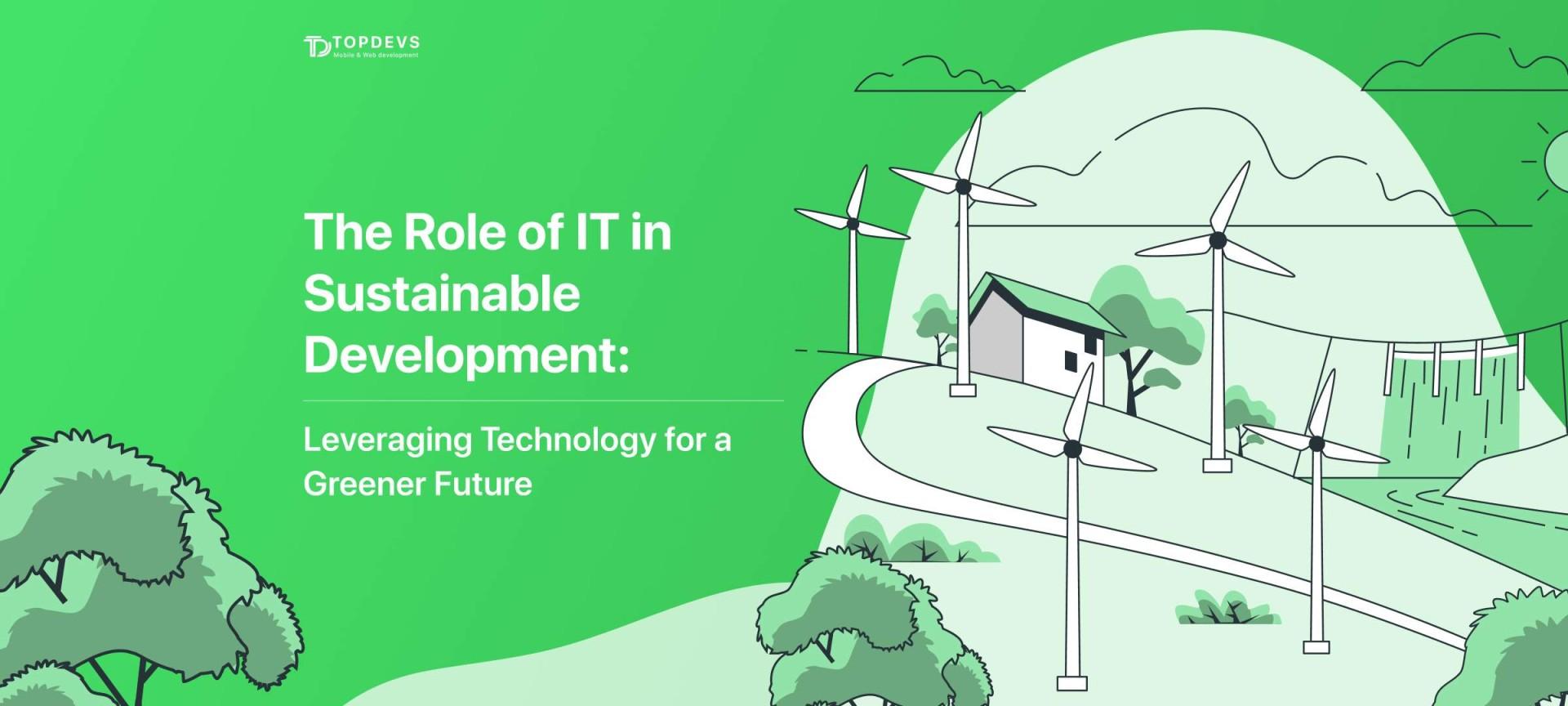
Classical examples of sustainable, renewable energy sources are solar, wind, hydroelectricity, and geothermal.
Separately, the automotive industry and the use of electric cars is worth noting. Renewable energy sources in electric vehicles can reduce the negative impact on the environment and significantly increase productivity along the supply chain through a wider choice of alternative means of transporting goods.
Sustainable Supply Chain Management: Enhancing Transparency and Traceability
Blockchain technology plays a significant role in the modernization of the supply chain. Blockchain has long ceased to be associated exclusively with Bitcoin and other cryptocurrencies. Today, such a system is used in various industries, from medicine for the secure storage and exchange of medical data to e-commerce for fast payments and transparency in supply chain tracking.
Blockchain is almost impossible to fool. Thus, buyers will always have access to up-to-date and truthful information regarding the transportation of deliveries. This helps to strengthen both B2B and B2C relationships. With the help of the blockchain, the supplier can openly provide the client with all the necessary information about the product without disclosing commercially sensitive data.
Smart Cities and Urban Planning: Building Sustainable Communities
Today, approximately 55% of the world's population lives in cities. According to statistics, this figure is expected to approach 68% by 2050. People prefer large cities because of the broader opportunities for implementation, developed infrastructure, and the availability of modern amenities.
The key technology for creating smart cities is IoT. Our smartphones alone produce, store, and transmit an unimaginable amount of information daily. Smart devices connected to one network, constantly exchanging information, can help each user of such a network to receive up-to-date information regarding any situation in the city and any need—for example, data on traffic congestion and building an optimized route.
One of the most widespread and influential examples of the use of IT in the innovative city system is bright lighting. Using alternative renewable energy sources, smart sensors, and IoT, both in individual houses and on the city streets, it is possible to reduce daily energy consumption by several hundred times.
Environmental Monitoring and Conservation: Harnessing Technology for Preservation
Responsible production includes a priority concern for the environment. We must be aware of our every action's importance and massive impact on nature.
Sustainable production focuses not only on the final result but also considers its environmental impact. Following technological progress and integrating modern technologies into production helps to reduce environmental pollution significantly, emissions of harmful substances, and overall energy consumption.
For greening enterprises, alternative energy sources are now widely used in the form of solar panels, wind energy, hydroelectric power plants, and even geothermal technologies. Special sensors and continuous environmental data collection will help monitor energy consumption, water use, and waste emission levels. Also, remember to use recyclable and environmentally friendly materials when producing any goods.
Challenges and Opportunities in IT-enabled Sustainable Development

The use of IT in the modern world opens up almost limitless opportunities for the continuous improvement of living conditions and the preservation of the planet's ecology. However, such great options and ambitions hide a certain number of difficulties, ranging from the availability of these IT solutions to the legal component.
Security and Privacy Concerns: Balancing Data Protection and Sustainability
When it comes to IoT, AI, and other IT technologies, questions will inevitably arise regarding the privacy of the personal information of all network users. Maintaining a high level of security often requires unrestricted access to all users' data, which creates some legal issues with protecting the right to privacy. In addition, such systems are vulnerable to hacks and information leakage. Therefore, the issue of security is always especially relevant for the IT industry.
To implement comprehensive and reliable data protection, a joint effort is needed between politicians and technology companies to implement the legal framework and create system transparency to increase the loyalty of all users.
A striking example of balanced user data protection is the General Data Protection Regulation (GDPR), implemented by the European Union in 2018. According to it, companies are obliged to obtain users' explicit consent before collecting and processing their data. The GDPR also obliges companies to provide users access rights to correct and delete their data.
Bridging the Digital Divide: Ensuring Equitable Access to IT Solutions
A critical factor in the global spread of IT solutions and building a sustainable future is their availability to all population segments. Today, this issue is especially relevant since the gap between people with access to modern technologies and those who are separated from them is becoming more critical every year. In the future, the IT industry can significantly increase the percentage of people with free access to modern technologies by reducing the cost of manufacturing devices and developing strategies to ensure and support digital literacy for all population groups.
Policy and Regulatory Frameworks: Fostering IT-driven Sustainability
Comprehensive integration of IT solutions into our lives is only possible with strong legal and government support. The existing difficulties in protecting the privacy of information should be regulated and supported by appropriate laws. Introducing new rules and legally regulated standards will help stimulate the opening of sustainable methods into modern production actively.
Beyond the regulatory framework, IT development is only possible with investment in further research. Understanding that the future lies behind sustainable technologies and vivid demonstrations of the apparent privileges of "green" industries will be an excellent incentive to invest resources in the IT industry for both the state and business owners.
Future Trends and Opportunities: Innovating for a Sustainable Future
Despite all the technological progress of recent years, we are now only on the threshold of the future opportunities of the IT industry. There is still a lot of research, improvements, and opportunities for integrating IT solutions into our lives.
More widespread use of AI in manufacturing is expected in the near future. There will also be an increase in the use of robotics and its application at different stages of production, supply, and delivery of services. Along with the modernization of the personal data protection system, the global use of IoT for the equipment of full-fledged intelligent cities is expected. There will also be an increase in the use of cloud solutions, which are already enjoying significant success in enterprises for rapidly transferring and storing vast amounts of information.
However, one of the most significant trends in the development of IT capabilities for a sustainable future is expected to be the research and search for alternative and renewable energy sources.
Conclusion: Embracing the Potential of IT for a Sustainable Tomorrow

IT opens up the massive potential for us to create a sustainable future. With the help of modern technologies, we can solve many urgent environmental problems with non-renewable energy sources and environmental pollution. The IT industry allows you to optimize resources, develop "green" technologies, and create entire intelligent cities.
However, for all its merits, the IT industry still faces challenges related to the security of personal data, legal support from the state, and the availability of digital solutions for all population groups.
By investing in sustainable technologies today, companies can significantly influence both the solution of current problems and the development of new technological trends to unlock the potential of IT and create an environmentally friendly, sustainable future.
Your idea - our execution. Let's create meaningful solutions together!
Contact ustags