Patient Monitoring API as a Way to Solve Healthcare Problems

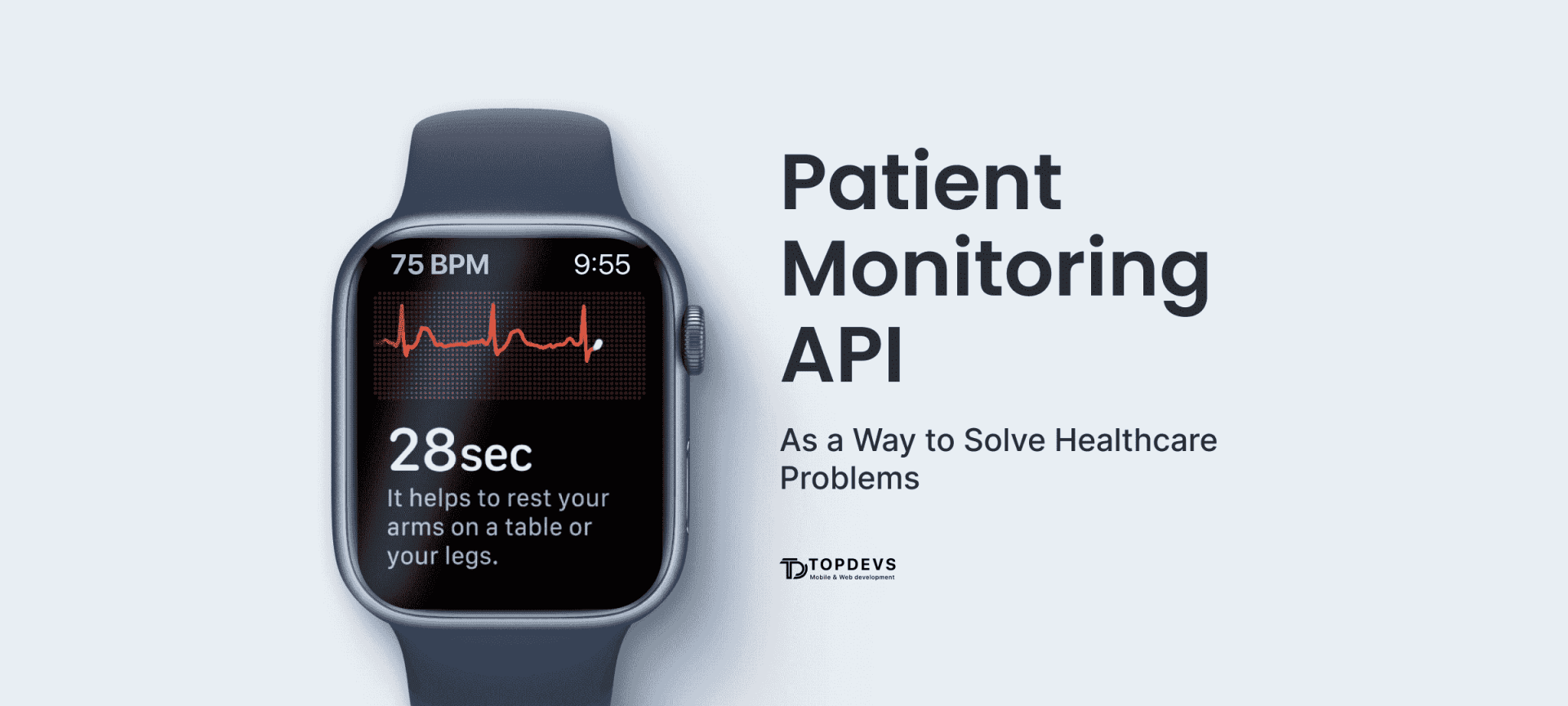
Technology in the healthcare industry is becoming more and more popular. They allow not only to track the current state of affairs of the patient, but also to prevent diseases.
The development of such products has its own characteristics and nuances. In this article, we will tell you what to consider in such software and what features you need to enable.
What Is the Remote Patient Monitoring API And Why Is It Important?
Remote Patient Monitoring (RPM) is a healthcare delivery method that collects and optimizes patient health data without visiting the clinic. This method is also called remote physiological monitoring or remote patient management. It is important to remember that each API complies with HIPAA security and privacy laws. They also use strong encryption, and most of these APIs even come with an SDK.
Data collection and entry into the system can occur both manually and automatically. For the second method, fitness trackers, biosensors, and the corresponding software for them are being developed. All data is received by medical staff and is not passed on to third parties. It can also be a personal collection of health data with subsequent transfer to the attending physician.
Patient monitoring systems include mobile applications, various wearable devices, and IoT devices for the home. For example, Alzheimer's disease can be diagnosed at an early stage. It also helps track the effectiveness of the treatment.
Remote Patient Monitoring Significance for Healthcare Companies
Remote patient monitoring allows companies to monitor the effectiveness of treatment with certain methods and drugs. Another important aspect is the personalization of patient care and, as a result, an improved experience.
Also, companies get the opportunity to improve and deepen research on a particular problem. Constant monitoring of patients and their condition allows the new healthcare API development of new ways to overcome diseases.
The Key Benefits that the Patient Monitoring API Delivers

As already mentioned, monitoring the health of patients is an important aspect of medicine today. Let's consider the main ones below.
Improved quality of service. Health care providers can obtain detailed information about the patient's condition, adjust their treatment and collect long-term data on the patient's health status. In addition, a complete picture of the physiological state of a person is formed. On the part of the patient, it is also an opportunity to receive timely feedback about their condition.
Increasing the responsibility of patients. Monitoring is a key tool in the patient's active role in their own health. This is due to the responsibility that is placed on him for his health to himself and the attending physician.
Expanding patient knowledge. This is a great opportunity to strengthen the position of the clinic in terms of marketing, engaging not only in treatment but also in patient education. You can use mailing lists or any other form of customer interaction.
Improved management of chronic care. Most diseases can be prevented from becoming chronic, and patient monitoring algorithms help here as well as possible. It also works with the early detection of related issues.
Optimized workflows. Automation of monitoring relieves staff and reduces the risk of errors when interacting with patients. It also allows you to focus on more critical patients. You can also set up integration with electronic patient records, improving the level of service.
How Does Patient Monitoring API Work?
Medtech solution technologies include a variety of patient monitoring solutions. But all of them are united by some properties, consider the main ones:
- sensors on wearable devices that read the patient's vital signs;
- local and centralized storage of collected data;
- software for analyzing collected data.
Depending on the specifics, there may also be various notifications and integrations with other services.
Read also: Healthcare Application Development: Everything You Need to Know
How to Use Patient Monitoring API in Software Healthcare Solutions?
Using the API can provide access to a lot of possibilities. It is not only about information about the state of health of patients, but also other possibilities. In particular, APIs can help healthcare professionals improve and simplify the delivery of healthcare in a number of cases.
Most of these applications are adapted to the needs of a particular direction in medicine, reading and analyzing certain indicators. Already, APIs simplify the exchange of information not only between doctors and patients but also between medical institutions. For example, this is relevant for analysis laboratories and clinics where a patient is being treated. API development costs can differ due to the functions.
Examples of How the API Works in Remote Patient Monitoring
APIs for medical institutions can have different manifestations, depending on the goals of the product. Let's look at a few examples of successful implementation of such services.
CharmHealth API
This is a service for large hospital monitoring and private practices. In addition to managing electronic medical records, as well as working with invoices and patient applications. Most of the features are available for web clients and mobile OSes.
Patient360 API
It is a system for exchanging data between medical institutions in the United States. Among the features: automatic import of electronic records and loading of patient databases for hospitals with the removal of duplicates.
HealthTap API
The cloud provides various APIs and SDKs to improve the delivery of telemedicine services. There is data analytics and chats for communication with patients. In addition, data sets are provided for patient education.
How to Start Implementing Patient Monitoring Algorithm API in Business Management?
The typical process for developing patient monitoring software is as follows.
1. Market research
You must clearly understand what is on the market and what errors and shortcomings are made in the current software. Without analysis, you will not be able to offer an improved solution and win back your market share.
2. Determining the problem you want to solve
When defining even a very narrow direction, you will always have customers and clearly understand how to work with them. By defining the problem, you understand what goal you need to achieve in the end and work with it.
3. Determining the audience for which you are preparing a solution
Understanding the audience allows you to prepare the appropriate functionality, proper API integration, and, subsequently, the interface. This will keep the audience and increase the demand for the product.
4. Choose a technology stack
The technology stack will determine not only the budgets of your project, but also its capabilities and duration. You must be sure that the technology stack and the list of planned features are the same.
5. Privacy Compliance
Medical technology solutions have increased safety requirements. Make sure you follow the privacy policy for HIPAA compliance. Also provide two-factor authentication and strong data encryption
6. Consider design
At this stage, the UI / UX design is created. This includes both creating a mockup and implementing the design in code.
7. Prototype and/or MVP development
This is an intermediate stage that allows you to understand the effectiveness of your application with a set of basic functions. You can test it in a focus group or do research.
8. Final testing and release
Before the release of the product, it is necessary to conduct all types of testing of the product. This made it possible not to spoil the impression of the end user and not to waste time correcting errors, incurring reputational risks.
TopDevs Is Your Experienced IT Partner for Healthcare Development

The TopDevs portfolio also includes a solution for the medical sector. This is Qliq, a powerful communications platform that bridges the gap between healthcare providers and patients. Here are extended opportunities for both parties, which allows not only comfort, but also productivity to solve a number of issues.
To date, Qliq app users send over 165 million messages per month. And more than 1,000 healthcare organizations use the Qliq platform for clinical collaboration.
Final Thoughts
Planning and implementing solutions for the medical sector is the future that is already here. In the context of the pandemic, we are still convinced that telemedicine, remote monitoring and various types of devices and software for health monitoring are extremely important.
Technology-enhanced medical services help streamline clinic operations, reduce costs, and increase the comfort and safety of patients and doctors. High-quality cost effective monitoring solutions are designed to transform the medical field and make it progressive.
Your idea - our execution. Let's create meaningful solutions together!
Contact ustags