Web and Mobile Development Company vs Software Agency: What Is the Difference?

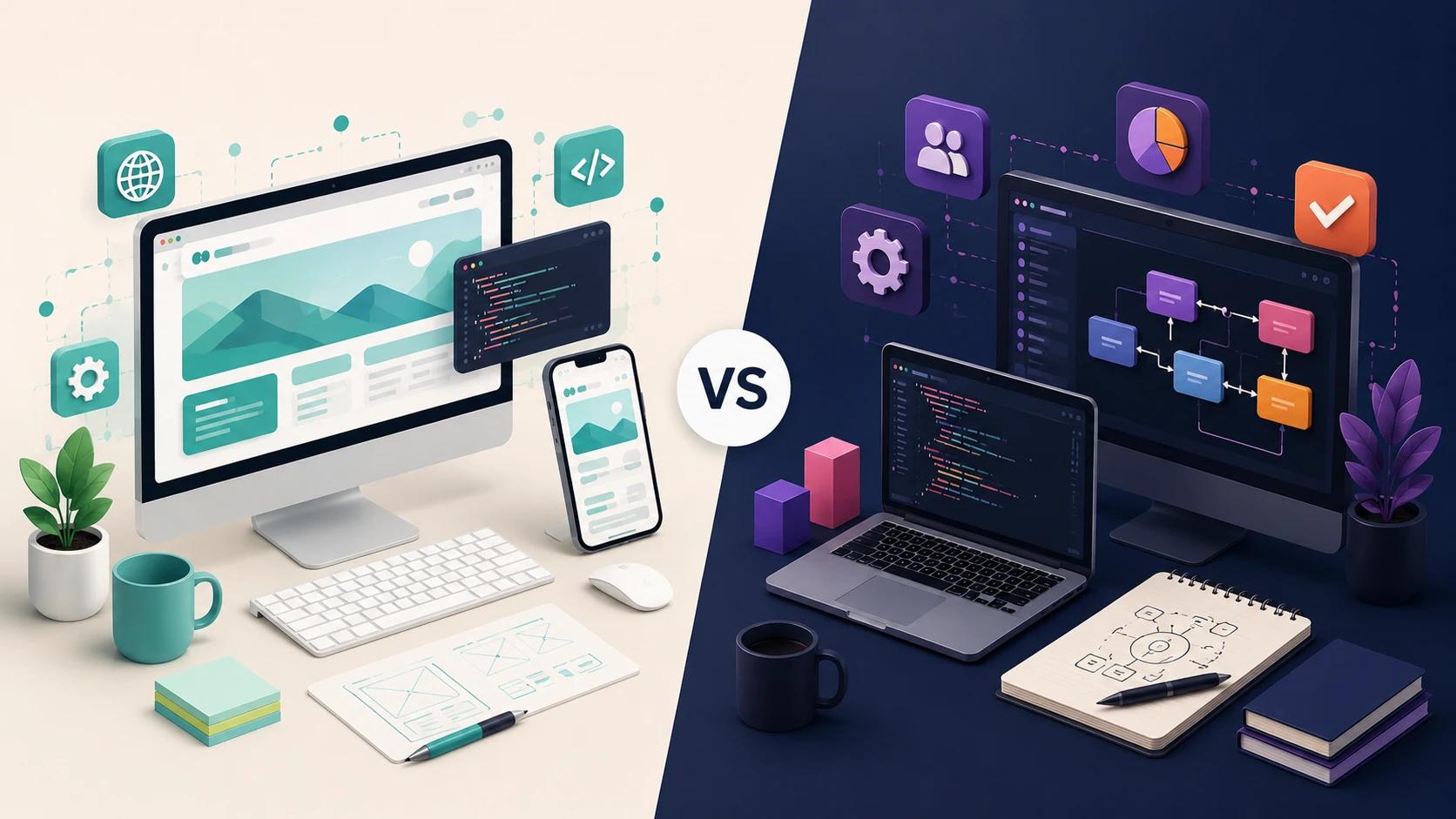
Choosing between a web and mobile development company and a software agency can be confusing because both types of vendors may offer design, development, consulting, and product support. On the surface, they can look similar. Both may build websites, web applications, mobile apps, SaaS platforms, internal tools, and custom software.
The difference is usually in focus, depth, team structure, delivery model, and long-term product involvement.
A software agency often works on a broader mix of digital projects. It may help with branding, websites, marketing assets, design, landing pages, automation, integrations, and product development. A web and mobile development company is usually more focused on building software products, custom applications, mobile apps, backend systems, and scalable digital platforms.
This distinction matters when your business needs more than a nice interface. If the product has complex logic, user roles, payments, integrations, backend architecture, mobile apps, admin panels, or long-term scaling plans, you need a partner that can think beyond a single launch.
TopDevs works as a web and mobile development company for startups, growing businesses, and enterprise teams that need custom web applications, mobile apps, SaaS platforms, and scalable software products.
What Is a Web and Mobile Development Company?
A web and mobile development company builds digital products across web and mobile platforms. This usually includes web applications, mobile apps, backend systems, APIs, admin panels, cloud infrastructure, and sometimes product discovery, UX/UI design, QA, DevOps, and long-term support.
The main strength of this type of company is technical product development. It can help build a browser-based platform, a mobile app for iOS and Android, or a complete ecosystem where web, mobile, backend, and internal tools work together.
For example, a logistics product may need a web dashboard for dispatchers and a mobile app for drivers. A healthcare platform may need a web portal for doctors and a mobile app for patients. A marketplace may need buyer and seller mobile apps, an admin panel, payment logic, notifications, and a backend that connects everything.
A web and mobile development company is usually a better fit when the product has multiple technical layers. The team is not only designing screens. It is building the system behind them.
This is why businesses often choose this model for SaaS platforms, fintech products, marketplaces, enterprise apps, healthcare tools, AI products, booking systems, and custom business applications.
What Is a Software Agency?
A software agency is a broader term. Some agencies are highly technical and build complex software. Others are more focused on design, marketing websites, brand experiences, digital campaigns, automation, or lightweight development.
This does not mean a software agency is weak. Many agencies do excellent work. The important question is what kind of agency it is.
A design-led agency may be strong at branding, UX/UI, websites, and visual communication. A marketing-focused agency may be good at landing pages, funnels, SEO support, analytics, and conversion. A product-focused software agency may be close to a development company and capable of building custom web and mobile applications.
The challenge is that the word “agency” does not always explain the team’s technical depth. One agency may build enterprise-grade software. Another may mainly outsource development after selling the project. Another may be excellent for design but not strong in backend architecture or mobile engineering.
Before hiring a software agency, the business should understand what the agency actually does in-house, how technical its team is, and whether it has experience with products similar to yours.
The Main Difference Is Product Depth
The biggest difference between a web and mobile development company and a general software agency is usually product depth.
A development company is often built around engineering delivery. It can support frontend, backend, mobile development, databases, cloud infrastructure, integrations, QA, and release management. Its process is usually closer to software product development.
A software agency may be broader. It may support strategy, design, marketing, branding, and web production, but may not always have the same depth in application architecture, mobile engineering, DevOps, or long-term product scaling.
This becomes important when the product is complex.
A simple marketing website does not need the same team as a SaaS platform. A mobile app with payments, user accounts, push notifications, admin logic, and analytics does not need the same process as a landing page. An enterprise application connected to internal systems does not need only design and frontend development. It needs architecture, security, integrations, testing, and maintenance.
If your project is mostly about presentation, an agency may be enough. If your project is about building a product that users will depend on, a development company is often the safer choice.
When a Software Agency Can Be the Right Choice
A software agency can be a strong fit when the project is connected to brand, marketing, content, or a limited digital experience.
For example, if your company needs a marketing website, product landing page, brand refresh, campaign microsite, conversion-focused web design, or a lightweight web tool, an agency may be the right partner. Agencies often understand communication, positioning, user perception, and visual storytelling very well.
A software agency can also be useful when the product scope is small and does not require deep backend architecture or long-term engineering support.
Some agencies also specialize in MVPs, prototypes, or early product validation. This can be useful when the business wants to explore an idea before investing in full development.
The key is to match the agency’s strengths with the project. If the agency is design-led, use it for design-led work. If it is marketing-led, use it for marketing-led work. If it has a strong engineering team, it may also handle more complex software.
Problems appear when a business hires a general agency for a technically demanding product without checking whether the team can actually build and maintain it.
When a Web and Mobile Development Company Is a Better Fit
A web and mobile development company is usually a better fit when the product has real software complexity.
This includes user accounts, multiple user roles, payments, subscriptions, dashboards, admin panels, API integrations, mobile apps, backend logic, cloud infrastructure, security requirements, or long-term feature development.
It is also the stronger choice when web and mobile need to work together. Many products are not just one app. They are ecosystems. A mobile app may depend on a web admin panel. A customer-facing platform may need both desktop and mobile access. An internal business system may need web dashboards for managers and mobile tools for employees.
In these cases, hiring separate teams for web, mobile, backend, and infrastructure can create fragmentation. One team may build the mobile app without fully understanding the backend. Another may build the web dashboard without planning mobile use cases. A third may handle integrations without thinking about user experience.
A full-cycle development company can reduce this risk because it sees the product as one system.
TopDevs works as a software application development company for businesses that need web applications, mobile apps, backend systems, and product teams that can support long-term development.
Team Structure Is Usually Different
The team structure often shows the difference between a development company and a software agency.
A software agency may have strategists, designers, project managers, copywriters, frontend developers, marketers, and sometimes backend developers. This structure works well for brand, web, design, and marketing-driven projects.
A web and mobile development company usually has a more engineering-heavy team. It may include frontend developers, backend engineers, iOS developers, Android developers, React Native or Flutter developers, QA engineers, DevOps specialists, UX/UI designers, business analysts, product managers, and technical leads.
The difference matters because complex software needs many technical decisions. The team must plan architecture, database structure, APIs, permissions, integrations, testing, deployment, and maintenance.
For a simple website, this level of engineering may be unnecessary. For a SaaS platform, marketplace, fintech app, healthcare product, or enterprise system, it becomes essential.
The right team is not always the biggest team. It is the team that has the right roles for the product.
Delivery Models Are Not the Same
A software agency often works around projects. The client defines a goal, the agency delivers a website, campaign, app version, or digital asset, and the cooperation may end or move into support.
A development company can also work project by project, but it often supports longer product lifecycles. This may include discovery, MVP development, product scaling, dedicated teams, team augmentation, maintenance, and continuous development.
This is important because software products rarely stop after launch.
A mobile app will need updates. A web application will need improvements. A SaaS platform will need new features. An enterprise product will need integration changes, security updates, and performance optimization.
If your project has a clear one-time scope, a project-based agency model may be enough. If your product will keep evolving, a development company with long-term support or dedicated team options may be more practical.
The cooperation model should match the business reality. A startup validating an MVP, a company scaling a SaaS product, and an enterprise modernizing internal systems do not need the same delivery model.
Discovery and Product Thinking Matter More for Complex Projects
For simple projects, discovery may be short. The team needs to understand the brand, pages, content, design direction, and basic functionality.
For software products, discovery is much more important. The team needs to understand users, roles, workflows, integrations, business rules, technical risks, backend requirements, data structure, security, and future scaling plans.
This is where a web application development company or full-cycle app development company can provide more value. The team can help define what should be built first, what can wait, and what technical decisions will affect future growth.
Without proper discovery, complex software projects often become expensive. Developers make assumptions. Features are added without clear purpose. Integrations are underestimated. The first version becomes too large or too weak. The product launches late or requires rework.
A strong development partner should help reduce this risk before writing code.
Web and Mobile Products Need Consistent Architecture
When a product includes both web and mobile, architecture becomes one of the most important parts of the project.
The mobile app, web application, admin panel, backend, APIs, database, notifications, analytics, and integrations should work as one system. If they are planned separately, the product can become hard to maintain.
For example, a marketplace may need a web dashboard for sellers, mobile apps for buyers, an admin panel for moderation, payment logic, reviews, messaging, and notifications. If each part is built without a shared architecture, future development becomes slow and risky.
A web and mobile development company can plan the product ecosystem more consistently. The team can design APIs that support both web and mobile, create shared business logic, and avoid duplicated work.
This is especially useful for startups and enterprises that plan to scale. Good architecture makes the product easier to extend. Weak architecture makes every new feature more expensive.
The Cost Difference Is Not Always Obvious
A software agency may look cheaper at the beginning if the project is simple. For websites, landing pages, and design-heavy projects, this can be true.
For custom applications, the situation is different. A lower initial estimate may not include backend complexity, QA, DevOps, security, documentation, post-launch support, mobile development, or long-term maintenance.
A development company may give a higher estimate because it includes more of the real work needed to build and support the product properly.
The better question is not which vendor is cheaper. The better question is what is included and what risks remain after launch.
A cheap build can become expensive if the product needs to be rebuilt, redesigned, refactored, or migrated later. On the other hand, a large development team can also be unnecessary if the business only needs a simple web presence.
Cost should be evaluated against the type of project. A marketing website and a software platform should not be priced or judged the same way.
How to Choose Between a Development Company and a Software Agency
The easiest way to choose is to look at the core purpose of the project.
If the main goal is brand presentation, marketing, visual identity, content, or lead generation, a software agency or digital agency may be a good fit.
If the main goal is to build a functional product with users, data, roles, payments, integrations, dashboards, mobile apps, or long-term development needs, a web and mobile development company is usually a better option.
The more your project depends on backend logic, technical reliability, scalability, and future development, the more important engineering depth becomes.
You should also look at the vendor’s case studies. Do they show only visuals, or do they explain the product problem, technical challenge, and business result? Do they have mobile development experience? Can they build both web and mobile? Do they understand backend architecture? Can they support the product after launch?
The answers will usually make the decision clearer.
Questions to Ask Before Hiring
You do not need to ask dozens of questions, but you should understand how the vendor thinks.
Ask whether the team has built similar products before. Ask what parts of the project they handle in-house. Ask how they approach discovery, architecture, UX, backend development, mobile development, QA, and post-launch support.
For web and mobile products, ask how they plan APIs, user roles, data synchronization, admin panels, and mobile-specific flows. If the product may scale, ask how they think about maintainability and future development.
A good vendor should be able to explain trade-offs clearly. They should not say yes to everything without discussing cost, risk, and technical impact.
The strongest sign is not a polished sales pitch. It is the ability to ask smart questions about your business and explain what should be built first.
Red Flags to Watch For
Some warning signs are easy to notice early.
Be careful if the vendor gives a fixed price for a complex app after one short call, avoids technical questions, cannot explain who will work on the project, or has no clear process for QA and post-launch support.
Another red flag is when the team pushes one solution for every project. A serious partner should not recommend the same technology, architecture, or delivery model without understanding the product.
It is also risky when an agency presents strong visuals but cannot explain backend logic, scalability, security, or maintenance. For a marketing website, that may not matter much. For a software product, it matters a lot.
Communication before the contract is also important. If the team is vague, slow, or unclear during the sales process, development will probably not be smoother.
Why Long-Term Product Support Matters
A website may need updates from time to time, but a software product usually needs continuous support.
After launch, users will find issues, request improvements, and behave differently than expected. Business priorities will change. New integrations may be needed. Operating systems, browsers, frameworks, and APIs will update. Security requirements may become stricter.
A product team should be ready for this.
This is one reason why a web and mobile development company can be a better long-term partner than a general agency for complex products. It can support the full lifecycle: discovery, MVP, launch, scaling, maintenance, and new feature development.
For startups, this means moving from the first version to a more mature product. For enterprises, it means keeping internal systems stable and aligned with business needs. For SaaS companies, it means improving the product continuously without losing technical consistency.
TopDevs works as an application development firm for companies that need long-term software development support across web, mobile, backend, and product scaling.
The Right Choice Depends on What You Are Building
A software agency can be the right choice for branding, websites, campaigns, prototypes, and design-led projects. A web and mobile development company is usually the stronger choice for custom applications, mobile products, SaaS platforms, marketplaces, enterprise software, and systems that need long-term technical support.
The difference is not about which type of vendor is better in general. It is about which one fits the project.
If your business needs a digital product that users will rely on, the development partner should understand architecture, UX, backend systems, mobile development, QA, integrations, and scaling. If your business needs a strong web presence or marketing experience, an agency may be enough.
For companies building serious web and mobile products, the safest partner is usually the one that can think like a product team, not only a service provider.
TopDevs helps startups, growing companies, and enterprise teams build custom web applications, mobile apps, SaaS platforms, and scalable digital products from idea to launch and further growth.
Your idea - our execution. Let's create meaningful solutions together!
Contact ustags