 Hanna VoronovaCEOUnited Kingdom
The concept of MVP has become one of the most widely used — and often misunderstood — ideas in modern product development. Many founders and businesses talk about MVPs, but not everyone clearly understands what they are, how they work, and why they matter.
Understanding what is MVP in software development is essential for anyone building digital products, especially startups operating under time, budget, and market pressure. An MVP is not a cheap prototype and not a stripped-down version of a final product. It is a strategic tool designed to reduce risk, accelerate learning, and guide product decisions.
This article explains what does MVP mean in software development, how MVP development works in practice, what benefits it offers, and how companies use MVPs to move from idea to validated product.
To understand what does MVP mean in software development, it helps to break down the term itself. MVP stands for Minimum Viable Product. It refers to a version of a product that includes only the core features necessary to deliver value to users and collect meaningful feedback.
An MVP is built to answer critical questions early. Does the problem really exist? Do users care enough to engage? Are they willing to change behavior or pay for a solution? Instead of guessing, teams use MVPs to learn from real usage.
In software development, MVPs are not shortcuts. They are intentional, focused products designed to validate assumptions before significant resources are committed.
So, what is MVP in software development in practical terms? It is a working software product that solves a specific problem for a defined audience, using the smallest possible set of features.
An MVP must be usable, reliable, and valuable — even if it is not feature-complete. Users should be able to understand what the product does and why it exists. If an MVP fails to deliver real value, it cannot provide useful feedback.
This distinction is important. An MVP is not a mockup or a demo. It is a real product released to real users under real conditions.
What is MVP development refers to the structured process of planning, building, launching, and learning from an MVP. It is not just a development phase but a product strategy.
MVP development involves identifying assumptions, prioritizing features that test those assumptions, and releasing the product quickly enough to gather insights. The goal is learning, not perfection.
Effective MVP development requires discipline. Teams must resist the urge to add features that do not support validation goals. Every decision should be tied to a specific question the MVP is meant to answer.
Traditional product development often starts with detailed specifications and long development cycles. Teams aim to build a complete solution before releasing anything to users.
MVP development takes a different approach. Instead of trying to predict what users want, teams release early and learn from actual behavior. This reduces the risk of building products that nobody needs.
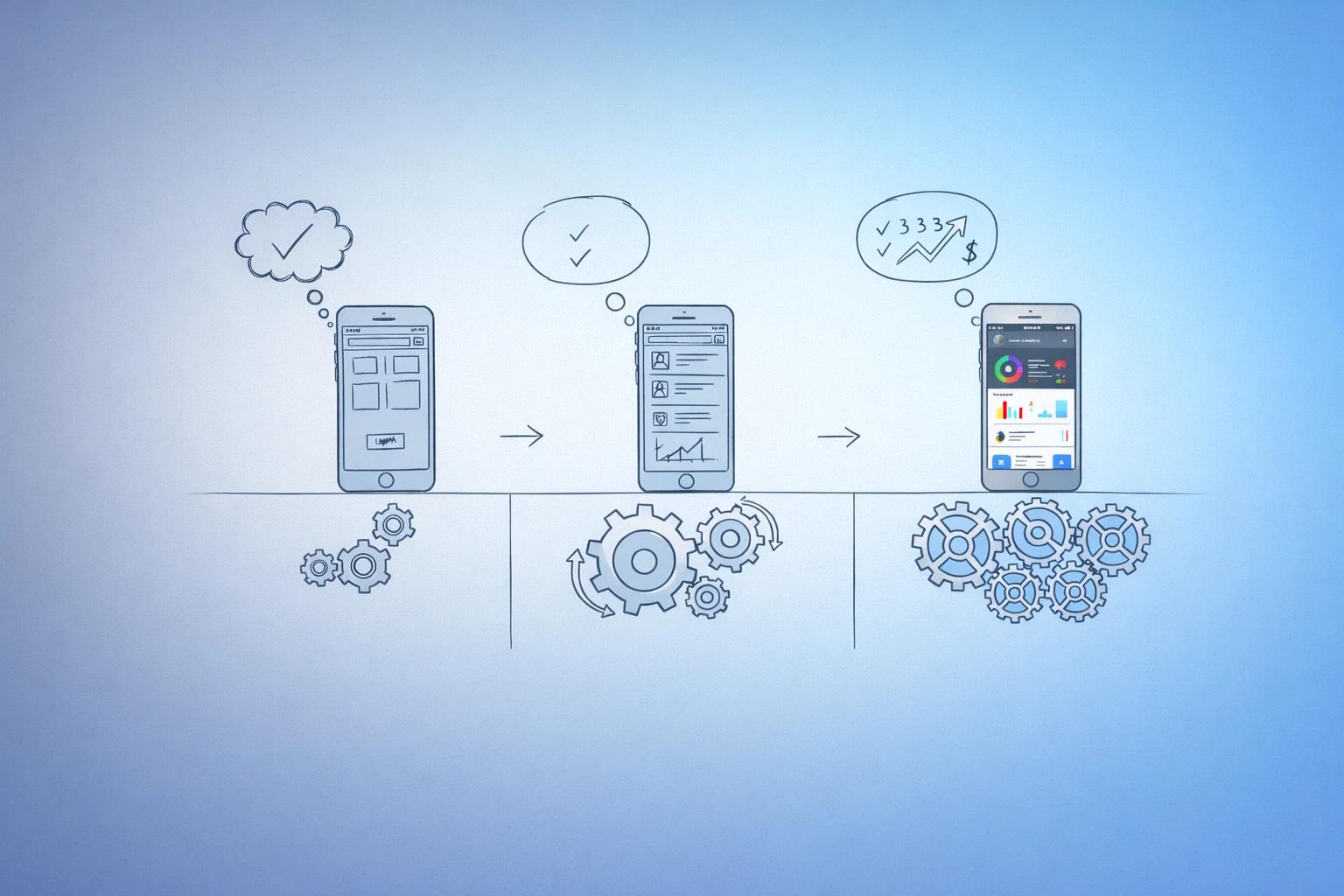
For startups and innovative teams, MVPs provide a faster and more reliable path to product–market fit. Rather than committing to a full roadmap upfront, they adapt based on evidence.
While MVPs are commonly discussed in software, the concept applies more broadly to product development. What is MVP in product development is essentially the same idea: build the smallest version of a product that delivers value and enables learning.
In software, MVPs are easier to iterate because changes can be deployed quickly. This makes MVPs particularly effective for digital products, where feedback loops are short and data is readily available.
Understanding MVPs as part of product development — not just engineering — helps teams align business goals with technical execution.
MVP development matters because it reduces uncertainty. Most product ideas fail not because of poor execution, but because they solve the wrong problem or target the wrong audience.
By building an MVP, teams test assumptions early. They learn what users actually do, not what they say they might do. This learning informs future development and investment decisions.
For businesses, MVPs also provide clarity. They reveal whether an idea deserves further funding, pivoting, or abandonment — before large budgets are spent.
One of the main benefits of MVP development is speed. Teams can move from idea to market much faster by focusing only on essential functionality.
Another benefit is cost efficiency. Building less means spending less upfront. This is especially important for startups and early-stage products.
MVPs also improve decision-making. Data collected from real users is far more reliable than assumptions or internal opinions. This evidence-based approach increases the likelihood of long-term success.
MVP software is best understood as a learning instrument. Its primary purpose is to generate insights that guide product direction.
Usage patterns, engagement metrics, and qualitative feedback help teams understand user needs and priorities. These insights shape future iterations and feature development.
Without this learning loop, product development becomes speculative. MVPs turn uncertainty into actionable information.
Many companies choose to work with external providers offering MVP software development services. These services combine technical execution with product-focused thinking.
A professional provider helps define MVP scope, choose appropriate technologies, and deliver a product quickly without sacrificing quality. Experience with similar projects allows teams to avoid common mistakes.
For founders without technical backgrounds, MVP development services provide structure and guidance throughout the process.
An MVP development company does more than write code. It helps translate business ideas into functional products that can be tested in the real world.
Such companies support discovery, feature prioritization, design, development, and launch. They also help interpret feedback and plan next steps.
Choosing the right partner is critical. A good MVP development company challenges assumptions, asks hard questions, and keeps the focus on validation rather than features.
Some businesses build MVPs internally, while others work with an MVP software development company. Each approach has advantages and trade-offs.
In-house teams offer direct control but may lack experience with MVP-specific challenges. External teams bring specialized knowledge and speed but require clear communication.
For many startups, working with an experienced MVP partner reduces risk and accelerates learning.
MVPs can be built as web apps, mobile apps, or both. An MVP app development company helps teams choose the right platform based on audience, use case, and validation goals.
Mobile MVPs work well for consumer-facing products, while web MVPs often suit SaaS platforms and internal tools. The key is choosing a platform that supports fast iteration and user feedback.
Platform decisions should consider future scaling without overengineering the initial version.
Many well-known products started as MVPs. Early versions often had limited functionality but delivered clear value.
These examples demonstrate that MVPs do not need to be perfect to succeed. They need to solve a real problem well enough to attract users and generate learning.
The lesson is not to copy features, but to adopt the mindset: start small, learn fast, and evolve based on evidence.
One common misconception is that MVPs are low-quality products. In reality, MVPs must be reliable enough to support real users.
Another misconception is that MVPs are disposable. While some MVPs are abandoned after validation, many evolve into full products.
Understanding what MVPs are — and what they are not — helps teams use them effectively.
MVP development should be aligned with long-term goals. Early architectural and design decisions influence how easily a product can scale.
While MVPs focus on minimal functionality, they should not create technical dead ends. A thoughtful approach balances speed with future flexibility.
Teams that treat MVPs as part of a broader strategy are better positioned for sustainable growth.
MVP development is particularly effective when uncertainty is high. New markets, innovative ideas, and untested business models all benefit from early validation.
It may be less suitable for incremental improvements to existing, well-understood products. In those cases, traditional development may suffice.
Understanding when to use MVPs helps businesses apply the concept appropriately.
Launching an MVP is not the end of the journey. Once validation is achieved, teams must decide how to scale.
This transition involves expanding features, improving performance, and refining user experience. Data collected during the MVP phase guides these decisions.
Teams that plan for this transition early avoid unnecessary rewrites and delays.
At its core, MVP development is about risk reduction. It minimizes the chance of building products that fail due to lack of demand.
By testing ideas early, teams identify problems before they become expensive. This approach protects resources and increases confidence in product direction.
For startups and businesses alike, MVPs provide a structured way to navigate uncertainty.
Understanding what is MVP in software development changes how teams think about building products. MVPs shift the focus from speculation to learning.
When combined with disciplined execution and honest evaluation, MVP development becomes a powerful foundation for success. It allows teams to build products that users actually want, not just what teams assume they want.
In a competitive digital environment, the ability to learn quickly is a decisive advantage. MVP development provides the framework to do exactly that.
Your idea - our execution. Let's create meaningful solutions together!
Contact ustags

How To Create A Fitness App That Improves Training Process?
April 27, 2022
Best Mobile App Ideas for Different Markets 2025
October 11, 2024
How To Find And Hire The Best App Developers for Your Business
January 22, 2021