 Hanna VoronovaCEOUnited Kingdom
Choosing a mobile app development company in the USA is a strategic decision, not just a technical one. The company you hire will influence your product architecture, user experience, launch timeline, budget, scalability, and even the way your business reacts to feedback after the first release.
A mobile app can be a customer-facing product, an internal business tool, a marketplace, a healthcare platform, a fintech solution, a fitness product, or the core of a startup. Each case requires a different approach. That is why the right partner should not simply ask what features you want. A serious development team should first understand what business problem the app has to solve.
For US companies, the choice is especially important because the market is competitive, user expectations are high, and development costs can grow quickly when the scope is unclear. A good vendor will help you reduce risk before development starts. A weak one may deliver code, but leave you with technical debt, poor UX, unstable releases, or a product that is difficult to scale.
This guide explains how to choose a mobile app development company USA businesses can trust, what to check before signing a contract, and how to understand whether a team is capable of building a product, not just an app.
If you need a full-cycle team for discovery, design, development, testing, and launch, TopDevs provides custom mobile app development services for startups, growing companies, and enterprise clients.
Before comparing vendors, clarify what the app should do for your business. This may sound obvious, but many projects start with a feature list instead of a business goal. That creates problems later because the team begins building screens without understanding the logic behind them.
A fitness app, a fintech product, a healthcare platform, and an internal enterprise app may all need user profiles, notifications, dashboards, and payments. But the reason these features exist will be different. In one case, the goal may be user retention. In another, secure data exchange. In another, faster internal operations.
A good mobile app development company will ask about your users, business model, monetization, existing systems, expected launch timeline, and long-term plans. If the team jumps straight into technology without discussing the product context, that is a weak sign.
The goal at this stage is not to prepare a perfect specification. The goal is to make sure the future development partner can connect technical decisions with business outcomes.
Not every mobile project needs the same team structure. Some businesses need a small MVP team. Others need dedicated mobile app developers for continuous product development. Enterprise companies may need a partner that can handle integrations, compliance, security, and long-term support.
Freelancers can work for small tasks, prototypes, or isolated features. They are usually flexible and cost-effective, but they are rarely enough for a complex mobile product. The main challenge is coordination. A serious app may require product management, UX/UI design, backend development, mobile engineering, QA, DevOps, and release management.
An in-house team gives more control, but it is expensive and slow to build. For many startups and mid-sized companies, hiring a full internal mobile team before product-market fit is not efficient.
A mobile app development company sits between these options. You get access to a structured team, development process, technical leadership, and delivery experience without hiring every role internally. This is often the strongest model when you need to move from idea to launch with less operational risk.
For companies that already have a roadmap and need long-term capacity, a dedicated team model can also work well. In that case, the development company provides specialists who work as an extension of your internal team.
A portfolio is useful, but screenshots alone do not prove much. The real question is whether the company has experience with apps that are similar in complexity, industry, and business logic.
For example, fintech mobile app development requires strong attention to security, payments, identity verification, and data protection. Healthcare mobile app development may involve sensitive user data, secure communication, and compliance-related decisions. A fitness app development company should understand subscriptions, progress tracking, personalization, video content, and wearable integrations. AI mobile app development may require API integrations, data processing, model behavior, and infrastructure planning.
The closer the vendor’s experience is to your product type, the faster they can understand risks. They are also more likely to challenge weak assumptions before those assumptions become expensive.
When reviewing case studies, pay attention to what the company actually did. Did they only build the frontend? Did they handle backend architecture? Were they responsible for design? Did they manage the launch? Are they still supporting the product? A real case study should explain the business problem, the technical challenge, and the result.
You do not need to be a developer to evaluate a mobile development company. But you should expect the team to explain technical decisions clearly.
One of the first decisions is whether to build native apps, cross-platform apps, or start with one platform. Native development is often the right choice when performance, advanced device features, complex animations, or platform-specific behavior are critical. Cross-platform mobile app development can be a better option when the goal is to launch faster on both iOS and Android with a shared codebase.
React Native app development services and Flutter app development services are often used for MVPs, business apps, marketplaces, SaaS products, and many consumer applications. But cross-platform is not automatically the best option. A reliable company should explain where it makes sense and where native development is safer.
The same applies to backend architecture. Most mobile apps are not only mobile interfaces. They depend on APIs, databases, admin panels, integrations, authentication, notifications, analytics, and infrastructure. If the backend is poorly planned, the app may work during the first demo but fail under real usage.
A strong custom mobile app development company should be able to discuss scalability, security, integrations, performance, and maintenance without turning the conversation into jargon.
The discovery stage is where many projects either become realistic or start moving in the wrong direction.
During discovery, the team should clarify the product idea, user roles, core flows, feature priorities, technical risks, timeline, and budget expectations. For startups, this stage often defines the MVP. For enterprise projects, it helps uncover dependencies, integrations, internal workflows, and security requirements.
Skipping discovery may seem faster, but it usually creates more cost later. When the scope is unclear, developers make assumptions. Some assumptions turn into rework. Others turn into features that users do not need.
A good discovery process should produce a practical development plan. It does not have to be a huge document, but it should make clear what will be built first, what can wait, what the risks are, and how the team will approach delivery.
This is especially important for mobile app MVP development. The first version should be focused enough to launch, test, and learn from users. It should not become a bloated product that tries to solve every possible use case before the market has validated the idea.
Design is one of the easiest areas to underestimate. Many companies think about UX/UI only as visual design, but in mobile products, UX directly affects activation, retention, revenue, and support costs.
A good app should not force users to think too much. Onboarding should be clear. The main action should be easy to find. Forms should not create friction. Navigation should feel natural. Important states, such as loading, errors, payments, empty screens, and notifications, should be designed properly.
For business apps, UX can reduce the time employees spend on repetitive tasks. For consumer apps, it can decide whether users return after the first session. For fintech and healthcare products, clarity and trust are especially important because users interact with sensitive data.
When choosing an app development company, look at how they discuss design. If the conversation is only about colors and screens, the team may not be thinking deeply enough. If they talk about user flows, conversion, accessibility, retention, and product behavior, that is a better sign.
A mature development process gives you visibility and control. You should know who is working on the project, how communication is handled, how often you will see progress, and how changes are managed.
Most serious teams work in sprints. That means the project is divided into development cycles with regular planning, demos, reviews, and adjustments. This helps you avoid the situation where you wait for months and only then discover that the product does not match expectations.
Project management also matters because mobile development includes many moving parts. Design, backend, mobile development, testing, infrastructure, integrations, and release preparation must be coordinated. Without that coordination, even good developers can produce a messy result.
For US companies working with remote or nearshore teams, communication discipline is critical. Time zone overlap, clear English communication, written documentation, and predictable updates can make a big difference.
Mobile app development cost varies because apps vary. A focused MVP may cost tens of thousands of dollars, while a complex marketplace, fintech product, AI app, or enterprise platform can cost several hundred thousand dollars.
The cheapest estimate is not always a win. It may exclude QA, product management, backend complexity, documentation, DevOps, post-launch support, or proper discovery. A low number can also mean that the team has not understood the project.
A reliable company should explain what is included in the estimate. You should understand how much effort goes into design, backend, mobile development, testing, project management, launch, and maintenance. If a vendor gives a fixed price after one short call, the estimate is probably not serious.
Price should be evaluated together with risk. Paying less for weak architecture, unclear communication, or unstable code can become more expensive when the product needs to be rebuilt.
Good questions help you see whether the vendor is a real product partner or just a coding team.
Ask how they would approach the first version of your app. Ask which features they would postpone. Ask whether native or cross-platform development is better for your case. Ask what risks they see. Ask how they would reduce cost without damaging quality.
You should also ask how they handle backend architecture, QA, security, third-party integrations, App Store and Google Play releases, and post-launch support.
The answers matter less when they sound polished and more when they are specific. A strong team will not agree with every idea automatically. They will explain trade-offs. They may challenge your scope. They may suggest a simpler MVP. That is usually a good sign.
A vendor who says yes to everything may be easy to like during sales calls, but that approach can become dangerous during development.
Some warning signs appear early.
Be careful with a company that promises an exact price without proper discovery, avoids technical questions, cannot explain its process, or shows only visual portfolio examples without business context. The same applies to teams that push one technology for every project, ignore QA, avoid conversations about maintenance, or promise unrealistic timelines.
Another red flag is poor communication during the sales stage. If it is already difficult to get clear answers before the contract, it will probably not become easier once development starts.
A strong mobile development company should be transparent about risks, not only benefits. Every serious product has trade-offs. The team’s ability to discuss them honestly is part of the value you are paying for.
Launch is not the end of mobile app development. It is the point where real user feedback starts.
After release, the app will need updates, bug fixes, analytics review, performance improvements, store updates, new features, and sometimes architecture changes. Operating systems change. Third-party services update their APIs. User expectations evolve.
That is why it is better to choose a company that can support the full product lifecycle. For a startup, this may mean moving from MVP to a scalable product. For an enterprise, it may mean long-term maintenance, integrations, security updates, and feature development.
TopDevs provides mobile app development services USA companies can use for MVPs, custom mobile apps, enterprise products, and scalable iOS and Android applications.
The right mobile app development company should help you make better product decisions. Code quality matters, but it is only one part of the project.
A strong team will help define the MVP, choose the right technology, design user flows, plan backend architecture, test the product, manage releases, and support the app after launch. They will also explain what should not be built yet.
For US businesses, this kind of partnership is often more valuable than simply hiring the lowest-cost developers. A mobile product has to compete for attention, trust, performance, and retention. The team behind it should understand that.
If your company needs startup mobile app development, enterprise mobile application development, cross-platform mobile app development, or a dedicated mobile development team, TopDevs can help plan, build, launch, and scale your product.
Your idea - our execution. Let's create meaningful solutions together!
Contact ustags
How to Track Your Customer Behavior Through a Mobile App
January 18, 2022
What Is The Difference Between E-Commerce And Mobile Commerce?
July 6, 2021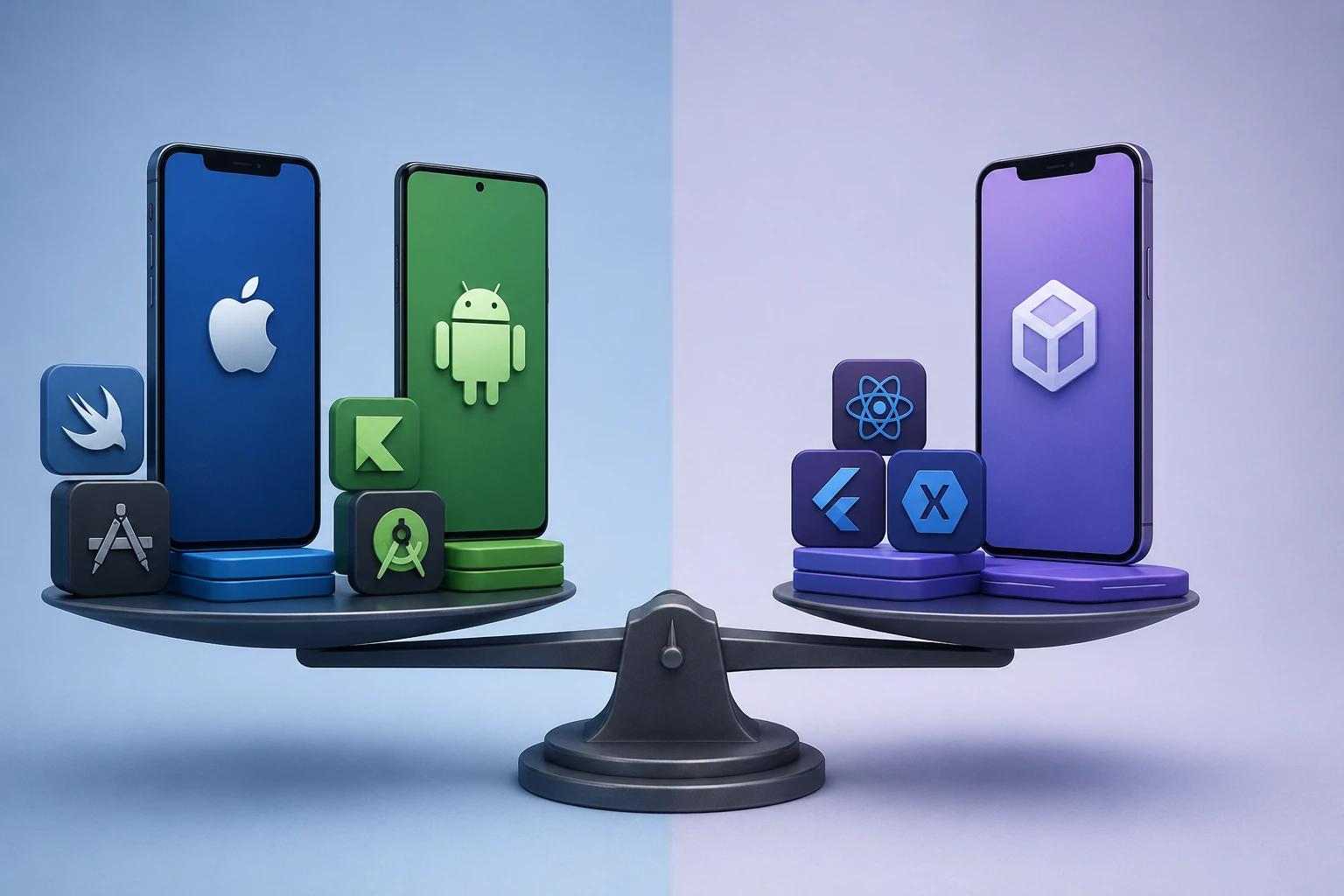
Native vs Cross-Platform Mobile App Development: What Should You Choose?
May 15, 2026